
Ch.8 - Covalent Compounds: Bonding Theories and Molecular Structure
McMurry - Chemistry 8th Edition
McMurry8th EditionChemistryISBN: 9781292336145Non è quello che usi tu?Cambia libro di testo
Capitolo 8, Problema 76

The following molecular model is a representation of caffeine. Identify the position(s) of multiple bonds in caffeine, and tell the hybridization of each carbon atom. 1Red = O, blue = N, gray = C, ivory = H.2 3D molecular model of caffeine showing O in red, N in blue, C in gray, and H in ivory.

Guida verificata passo dopo passo
1
Identify the positions of the multiple bonds in the caffeine molecule by looking for double bonds between carbon atoms (gray) and other atoms (oxygen in red and nitrogen in blue).
Note that the double bonds are typically represented by shorter bonds in the molecular model.
Determine the hybridization of each carbon atom by counting the number of sigma bonds and lone pairs around each carbon atom. Use the formula: sp, sp2, or sp3 hybridization.
For each carbon atom, if it forms 4 sigma bonds, it is sp3 hybridized; if it forms 3 sigma bonds and 1 pi bond, it is sp2 hybridized; if it forms 2 sigma bonds and 2 pi bonds, it is sp hybridized.
Summarize the positions of the multiple bonds and the hybridization states of each carbon atom in the caffeine molecule.

Risposta video verificata per un problema simile:

Questa soluzione video è stata consigliata dai nostri tutor come utile per risolvere questo problema.
Durata del video:
4m

Concetti chiave

Ecco i concetti essenziali che devi comprendere per rispondere correttamente alla domanda.

Molecular Structure

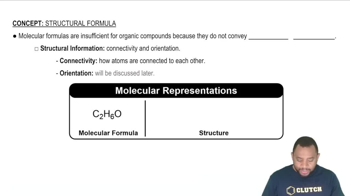
Molecular structure refers to the three-dimensional arrangement of atoms within a molecule. In the case of caffeine, understanding its structure involves identifying the types of atoms present (carbon, nitrogen, oxygen) and how they are connected, including the presence of multiple bonds such as double bonds. This structural information is crucial for determining the molecule's properties and reactivity.
Video consigliato:
Percorso guidato
02:08
Molecular Formula

Hybridization

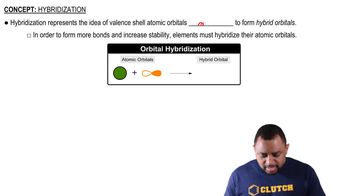
Hybridization is a concept used to describe the mixing of atomic orbitals to form new hybrid orbitals that can accommodate the bonding requirements of a molecule. In caffeine, each carbon atom can exhibit different hybridization states (sp3, sp2) depending on its bonding environment, which influences the geometry and angles of the bonds formed. Identifying the hybridization of each carbon is essential for understanding the molecule's shape and reactivity.
Video consigliato:

Multiple Bonds

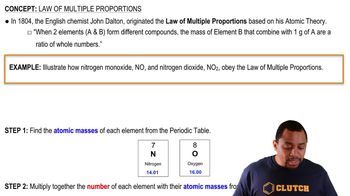
Multiple bonds, such as double or triple bonds, occur when two or more pairs of electrons are shared between atoms. In caffeine, the identification of these bonds is important as they affect the molecule's stability, reactivity, and overall geometry. Recognizing the positions of multiple bonds helps in predicting the behavior of the molecule in chemical reactions and its interactions with other substances.
Video consigliato:
Percorso guidato
03:32
Law of Multiple Proportions