Ch.13 - Solutions
Tro - Chemistry: A Molecular Approach 4th Edition
Tro4th EditionChemistry: A Molecular ApproachISBN: 9780134112831Non è quello che usi tu?Cambia libro di testo
Capitolo 13, Problema 44

A KCl solution containing 42 g of KCl per 100.0 g of water is cooled from 60 °C to 0 °C. What happens during cooling? (Use Figure 13.11.)Graph showing solubility of various salts in water at different temperatures.

Guida verificata passo dopo passo
1
Identify the solubility of KCl at 60 °C from the graph. Note that the solubility is approximately 45 g of KCl per 100 g of water.
Identify the solubility of KCl at 0 °C from the graph. Note that the solubility is approximately 28 g of KCl per 100 g of water.
Compare the initial concentration of KCl (42 g per 100 g of water) with the solubility at 0 °C (28 g per 100 g of water).
Determine the amount of KCl that will precipitate out of the solution as it cools from 60 °C to 0 °C by subtracting the solubility at 0 °C from the initial concentration.
Conclude that the excess KCl (42 g - 28 g) will precipitate out of the solution during cooling.

Risposta video verificata per un problema simile:

Questa soluzione video è stata consigliata dai nostri tutor come utile per risolvere questo problema.

Concetti chiave

Ecco i concetti essenziali che devi comprendere per rispondere correttamente alla domanda.

Solubility

Solubility is the maximum amount of solute that can dissolve in a given amount of solvent at a specific temperature. In the context of the question, the solubility of KCl in water changes with temperature, which is illustrated in the provided graph. As temperature increases, the solubility of most salts, including KCl, typically increases, allowing more solute to dissolve.
Video consigliato:
Percorso guidato
00:28
Solubility Rules

Cooling Effects on Solubility

When a solution is cooled, the solubility of most salts decreases, meaning that less solute can remain dissolved in the solvent. In the case of KCl, as the solution cools from 60 °C to 0 °C, the amount of KCl that can stay dissolved in the water diminishes, potentially leading to crystallization or precipitation of KCl if the solution becomes supersaturated.
Video consigliato:
Percorso guidato
01:17
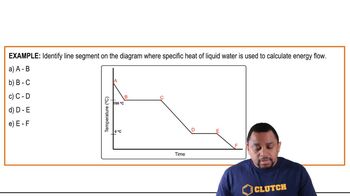
Cooling Curve Example

Supersaturation

Supersaturation occurs when a solution contains more dissolved solute than it can theoretically hold at a given temperature. This can happen when a solution is cooled slowly without allowing the excess solute to crystallize out. In the scenario described, if the KCl solution is cooled rapidly, it may become supersaturated, leading to the formation of solid KCl crystals as the temperature drops.
Video consigliato:
Percorso guidato
01:49
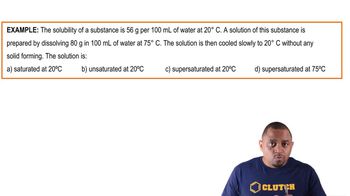
Types of Aqueous Solution Example