Ch.14 - Chemical Kinetics
Tro - Chemistry: A Molecular Approach 4th Edition
Tro4th EditionChemistry: A Molecular ApproachISBN: 9780134112831Non è quello che usi tu?Cambia libro di testo
Capitolo 14, Problema 95b

Consider this energy diagram:
<IMAGE>
b. Label the reactants, products, and intermediates.

Guida verificata passo dopo passo
1
Step 1: Understand the components of an energy diagram. An energy diagram typically shows the energy changes during a chemical reaction, with the y-axis representing energy and the x-axis representing the reaction progress.
Step 2: Identify the starting point of the diagram. The reactants are usually located at the beginning of the energy diagram, where the reaction starts.
Step 3: Locate the ending point of the diagram. The products are found at the end of the energy diagram, where the reaction concludes.
Step 4: Look for any peaks or valleys between the reactants and products. These represent intermediates or transition states, which are temporary species formed during the reaction.
Step 5: Label the diagram accordingly. Mark the initial energy level as 'Reactants', the final energy level as 'Products', and any intermediate peaks or valleys as 'Intermediates'.

Risposta video verificata per un problema simile:

Questa soluzione video è stata consigliata dai nostri tutor come utile per risolvere questo problema.
Durata del video:
3m

Concetti chiave

Ecco i concetti essenziali che devi comprendere per rispondere correttamente alla domanda.

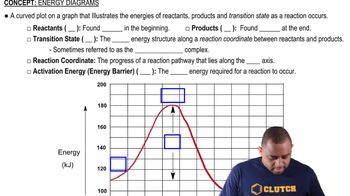
Energy Diagrams

Energy diagrams visually represent the energy changes during a chemical reaction. They typically plot the energy of the system against the progress of the reaction, illustrating the energy of reactants, products, and any intermediates. Understanding these diagrams helps in analyzing the stability of different species and the overall energy changes involved in the reaction.
Video consigliato:
Percorso guidato
01:57
Energy Diagrams

Reactants and Products

In a chemical reaction, reactants are the starting substances that undergo transformation, while products are the substances formed as a result of the reaction. Identifying these components is crucial for understanding the reaction's direction and the energy changes that occur. The energy diagram will show the relative energy levels of reactants and products, indicating whether the reaction is exothermic or endothermic.
Video consigliato:
Percorso guidato
00:53
Production of Hydrogen Example

Intermediates

Intermediates are transient species formed during the course of a reaction that are not present in the final products. They typically exist at a higher energy level than the reactants and products and are crucial for understanding the reaction mechanism. In energy diagrams, intermediates are represented as local minima, indicating points of stability before the reaction proceeds to completion.
Video consigliato:
Percorso guidato
02:14
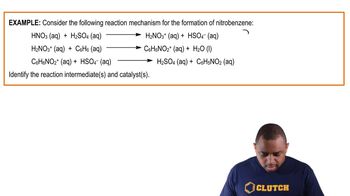
Reaction Mechanism Example