Ch.21 - Organic Chemistry
Tro - Chemistry: A Molecular Approach 4th Edition
Tro4th EditionChemistry: A Molecular ApproachISBN: 9780134112831Non è quello che usi tu?Cambia libro di testo
Capitolo 21, Problema 74b

List the products of each alcohol reaction. b.

Guida verificata passo dopo passo
1
Identify the type of alcohol involved in the reaction (primary, secondary, or tertiary).
Determine the type of reaction the alcohol is undergoing (e.g., oxidation, dehydration, substitution).
For oxidation reactions, consider the possible products: primary alcohols typically oxidize to aldehydes and then to carboxylic acids, secondary alcohols to ketones, and tertiary alcohols generally do not oxidize easily.
For dehydration reactions, identify the alkene that forms as a result of the elimination of water from the alcohol.
For substitution reactions, determine the nucleophile that will replace the hydroxyl group, forming a new compound.

Risposta video verificata per un problema simile:

Questa soluzione video è stata consigliata dai nostri tutor come utile per risolvere questo problema.
Durata del video:
1m

Concetti chiave

Ecco i concetti essenziali che devi comprendere per rispondere correttamente alla domanda.

Alcohol Functional Group

Alcohols are organic compounds characterized by the presence of one or more hydroxyl (-OH) groups attached to a carbon atom. This functional group is responsible for the unique chemical properties of alcohols, including their ability to participate in various reactions such as oxidation, dehydration, and substitution.
Video consigliato:
Percorso guidato
01:32
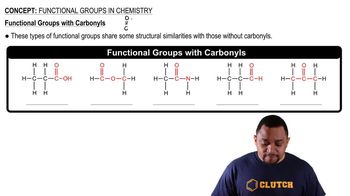
Carbonyl Functional Groups

Types of Reactions Involving Alcohols

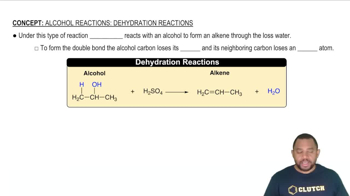
Alcohols can undergo several types of chemical reactions, including oxidation (where they are converted to aldehydes, ketones, or carboxylic acids), dehydration (leading to the formation of alkenes), and substitution reactions (where the -OH group is replaced by another functional group). Understanding these reactions is crucial for predicting the products formed.
Video consigliato:
Percorso guidato
01:30
Alcohol Reactions: Dehydration Reactions

Reaction Mechanisms

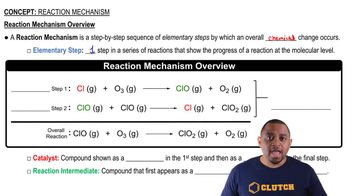
The mechanisms of alcohol reactions involve specific steps that describe how reactants are transformed into products. For example, in oxidation, the mechanism may involve the formation of a carbocation intermediate, while dehydration typically involves the removal of water. Familiarity with these mechanisms helps in understanding the conditions required for each reaction and the expected products.
Video consigliato:
Percorso guidato
03:06
Reaction Mechanism Overview