Ch.6 - Thermochemistry
Tro - Chemistry: A Molecular Approach 4th Edition
Tro4th EditionChemistry: A Molecular ApproachISBN: 9780134112831Non è quello che usi tu?Cambia libro di testo
Capitolo 6, Problema 34a,b,d

Convert between energy units. a. 231 cal to kJ b. 132×104 kJ to kcal d. 2.88×10⁴ J to Cal

Guida verificata passo dopo passo
1
Step 1: Identify the conversion factors needed for each part of the problem. For energy conversions, remember that 1 cal = 4.184 J and 1 kcal = 4.184 kJ.
Step 2: For part (a), convert calories to kilojoules. Use the conversion factor 1 cal = 4.184 J to first convert calories to joules, then convert joules to kilojoules by dividing by 1000.
Step 3: For part (b), convert kilojoules to kilocalories. Use the conversion factor 1 kcal = 4.184 kJ to convert kilojoules to kilocalories by dividing the kilojoules by 4.184.
Step 4: For part (d), convert joules to Calories (note that 1 Cal = 1 kcal). First, convert joules to kilojoules by dividing by 1000, then convert kilojoules to kilocalories using the conversion factor 1 kcal = 4.184 kJ.
Step 5: Ensure all units are correctly converted and check your calculations for accuracy. Remember to keep track of significant figures based on the given data.

Concetti chiave

Ecco i concetti essenziali che devi comprendere per rispondere correttamente alla domanda.

Energy Units

Energy can be measured in various units, with calories (cal), kilojoules (kJ), and joules (J) being common in chemistry. One calorie is defined as the amount of energy needed to raise the temperature of one gram of water by one degree Celsius. Understanding the relationships between these units is essential for converting energy values accurately.
Video consigliato:

Conversion Factors

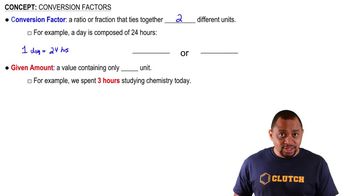
Conversion factors are ratios used to convert one unit of measurement to another. For energy, key conversion factors include 1 cal = 4.184 J and 1 kJ = 239.006 cal. Utilizing these factors allows for the systematic conversion of energy values from one unit to another, ensuring accuracy in calculations.
Video consigliato:
Percorso guidato
01:56
Conversion Factors

Thermodynamic Principles

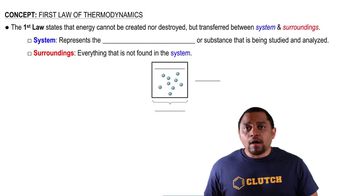
Thermodynamics is the study of energy transformations and the laws governing these processes. In the context of energy conversions, it is important to understand how energy is conserved and transformed between different forms, such as heat and work. This foundational knowledge aids in grasping the significance of energy unit conversions in chemical reactions and processes.
Video consigliato:
Percorso guidato
01:18
First Law of Thermodynamics