Ch.8 - Periodic Properties of the Elements
Tro - Chemistry: A Molecular Approach 4th Edition
Tro4th EditionChemistry: A Molecular ApproachISBN: 9780134112831Non è quello che usi tu?Cambia libro di testo
Capitolo 8, Problema 80

Choose the element with the more negative (more exothermic) electron affinity in each pair. a. Mg or S b. K or Cs c. Si or P d. Ga or Br

Guida verificata passo dopo passo
1
1. Electron affinity is the energy change that occurs when an electron is added to a neutral atom to form a negative ion. Generally, atoms with a larger atomic radius have a less negative (less exothermic) electron affinity because the added electron is further from the nucleus and therefore less strongly attracted to it.
2. For pair a (Mg or S), Sulfur (S) is to the right of Magnesium (Mg) on the periodic table, which means it has a smaller atomic radius and therefore a more negative electron affinity.
3. For pair b (K or Cs), Potassium (K) is above Cesium (Cs) on the periodic table, which means it has a smaller atomic radius and therefore a more negative electron affinity.
4. For pair c (Si or P), Phosphorus (P) is to the right of Silicon (Si) on the periodic table, which means it has a smaller atomic radius and therefore a more negative electron affinity.
5. For pair d (Ga or Br), Bromine (Br) is to the right of Gallium (Ga) on the periodic table, which means it has a smaller atomic radius and therefore a more negative electron affinity.

Risposta video verificata per un problema simile:

Questa soluzione video è stata consigliata dai nostri tutor come utile per risolvere questo problema.
Durata del video:
2m

Concetti chiave

Ecco i concetti essenziali che devi comprendere per rispondere correttamente alla domanda.

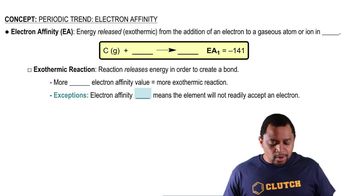
Electron Affinity

Electron affinity is the amount of energy released when an electron is added to a neutral atom in the gas phase, forming a negative ion. A more negative electron affinity indicates a greater tendency for an atom to gain an electron, which is often associated with the stability of the resulting anion. Understanding this concept is crucial for comparing elements, as it helps predict their reactivity and the energy changes involved in electron transfer.
Video consigliato:
Percorso guidato
01:34
Electron Affinity

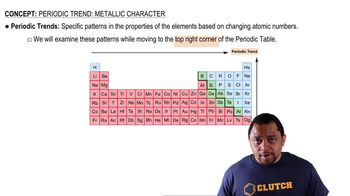
Trends in the Periodic Table

Periodic trends refer to the predictable patterns observed in the properties of elements as you move across a period or down a group in the periodic table. For electron affinity, elements on the right side of the table (like halogens) generally have more negative values compared to those on the left (like alkali metals). Recognizing these trends allows for informed predictions about the electron affinity of different elements.
Video consigliato:
Percorso guidato
00:38
Periodic Trends

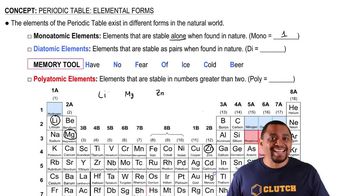
Comparison of Elements

When comparing elements, it is essential to consider their positions in the periodic table, as this influences their electron configurations and, consequently, their chemical properties. For example, elements in the same group may exhibit similar behaviors, while those in different groups can show significant differences. This comparative analysis is vital for determining which element in a pair has a more negative electron affinity.
Video consigliato:
Percorso guidato
02:35
Elemental Forms of Elements