An ibuprofen suspension for infants contains 100 mg/5.0 mL suspension. The recommended dose is 10 mg/kg body weight. How many mL of this suspension should be given to an infant weighing 18 lb? (Assume two significant figures.)
Ch.1 - Matter, Measurement & Problem Solving
Tro5th EditionChemistry: A Molecular ApproachISBN: 9780134874371Non è quello che usi tu?Cambia libro di testo
Capitolo 1, Problema 107
Classify each property as intensive or extensive. a. volume b. boiling point c. temperature d. electrical conductivity e. energy
Guida verificata passo dopo passo1
Understand the difference between intensive and extensive properties: Intensive properties do not depend on the amount of substance present, while extensive properties do depend on the amount of substance.
Classify volume: Volume is an extensive property because it changes with the amount of substance present.
Classify boiling point: Boiling point is an intensive property because it remains the same regardless of the amount of substance.
Classify temperature: Temperature is an intensive property because it does not depend on the quantity of the substance.
Classify electrical conductivity and energy: Electrical conductivity is an intensive property, while energy is an extensive property because it depends on the amount of substance.

Risposta video verificata per un problema simile:
Questa soluzione video è stata consigliata dai nostri tutor come utile per risolvere questo problema.
Durata del video:
1mConcetti chiave
Ecco i concetti essenziali che devi comprendere per rispondere correttamente alla domanda.
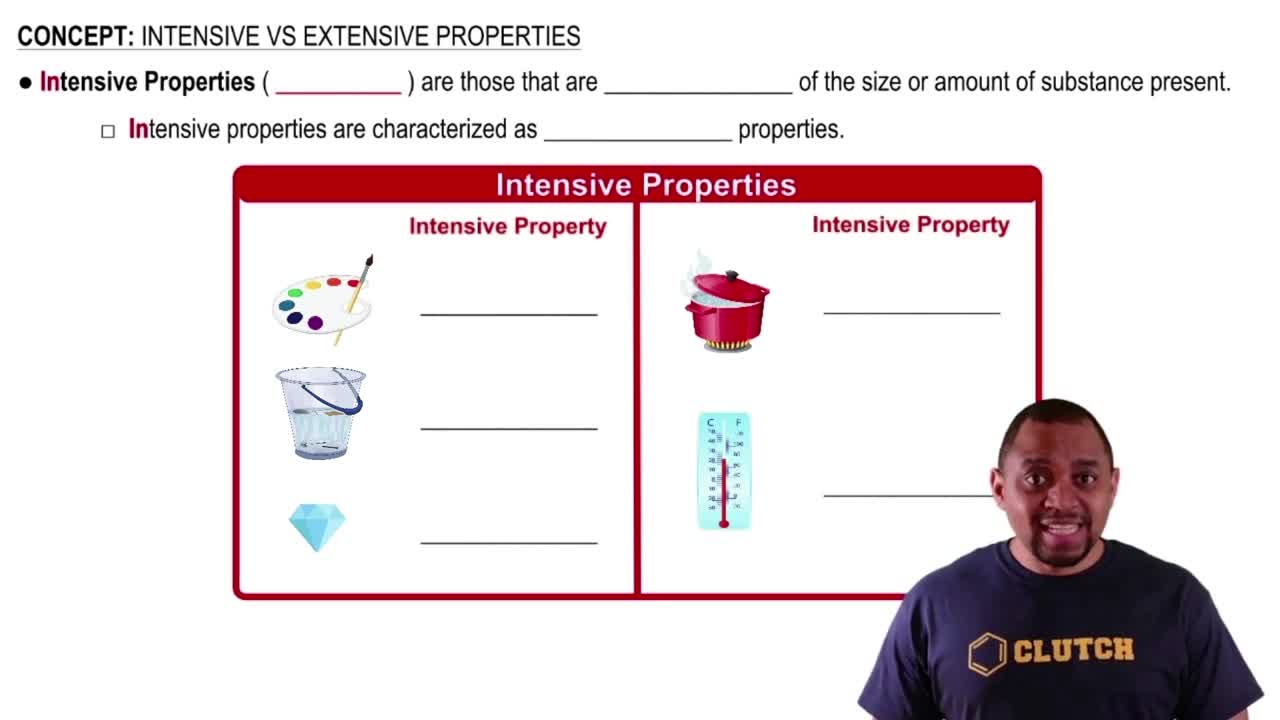
Intensive Properties
Intensive properties are characteristics of a substance that do not depend on the amount of material present. Examples include boiling point, temperature, and electrical conductivity. These properties are intrinsic to the material itself, allowing for identification and classification regardless of sample size.
Video consigliato:
Percorso guidato
Intensive Properties
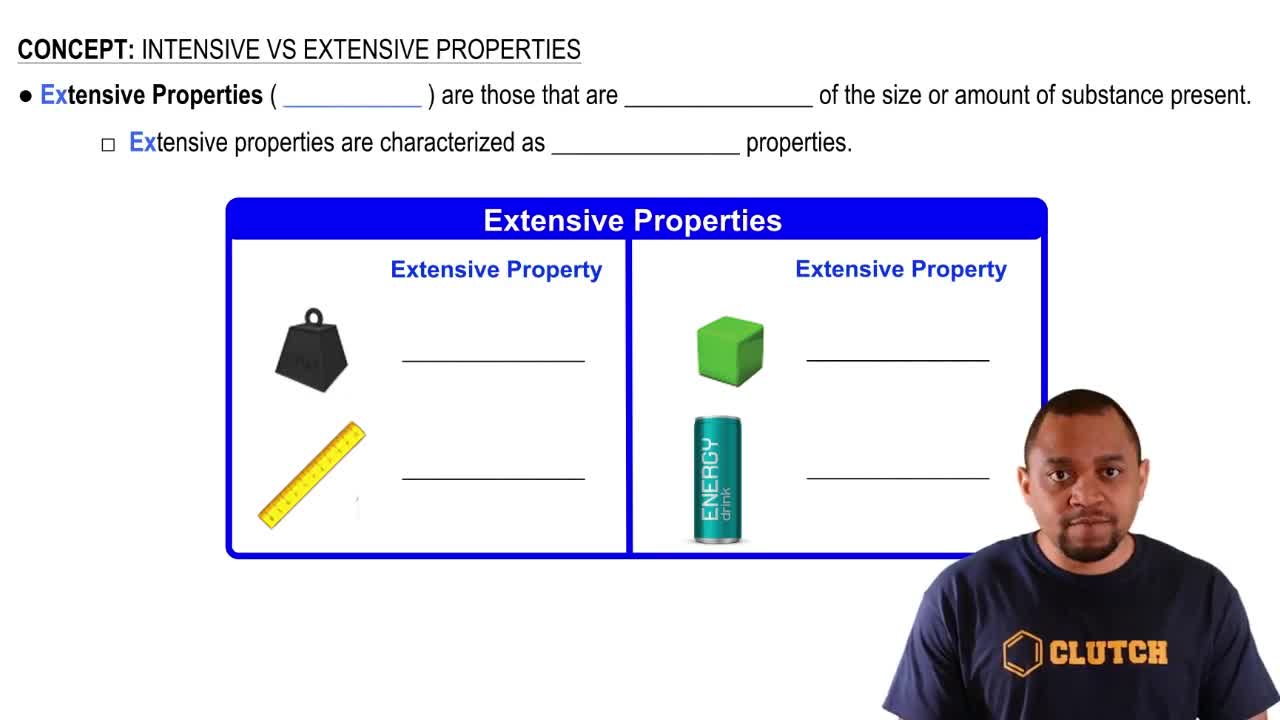
Extensive Properties
Extensive properties are characteristics that do depend on the amount of substance present. Volume and energy are prime examples of extensive properties, as they increase with the quantity of material. Understanding the distinction between extensive and intensive properties is crucial for classifying physical properties accurately.
Video consigliato:
Percorso guidato
Extensive Properties
Classification of Properties
Classifying properties as intensive or extensive helps in understanding the behavior of substances under various conditions. This classification is fundamental in chemistry, as it aids in predicting how substances will react or change when manipulated, such as during chemical reactions or physical changes.
Video consigliato:
Percorso guidato
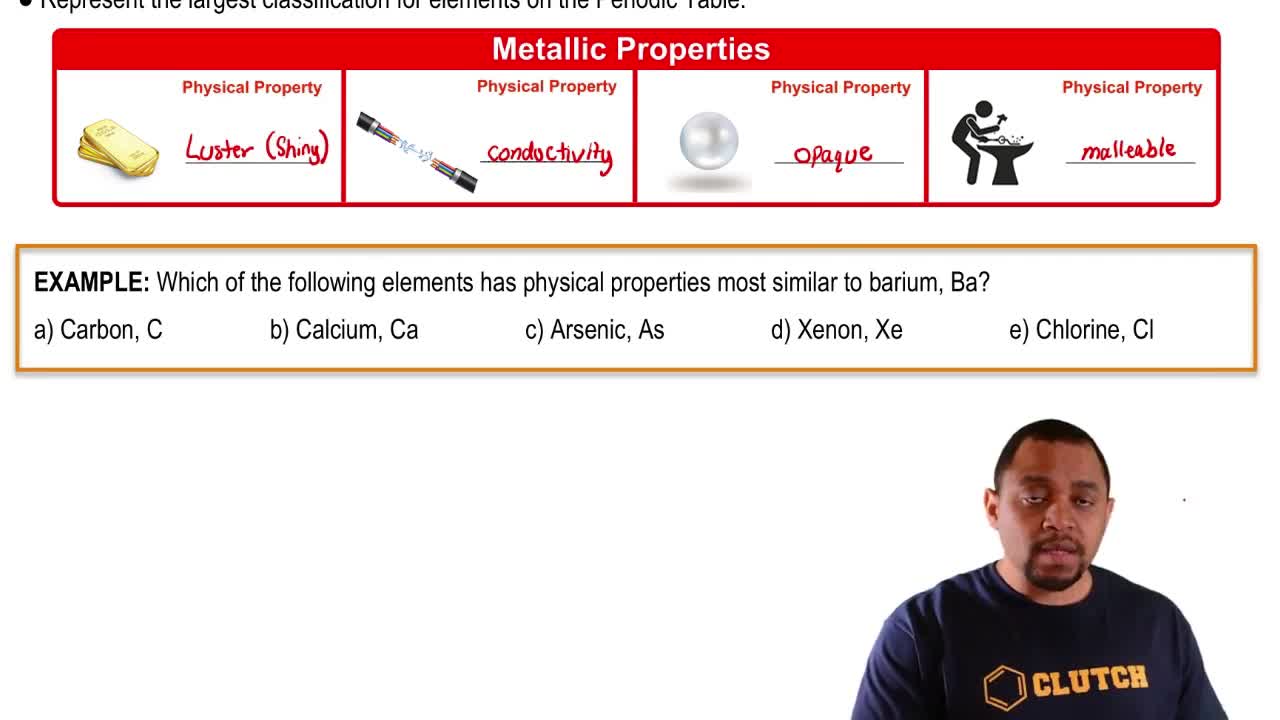
Element Classification Example
Pratica correlata
Domanda del libro di testo
4074
views
4
rank
Domanda del libro di testo
Determine the number of picoseconds in 2.0 hours.
778
views
Domanda del libro di testo
There are exactly 60 seconds in a minute, exactly 60 minutes in an hour, exactly 24 hours in a mean solar day, and 365.24 solar days in a solar year. How many seconds are in a solar year? Give your answer with the correct number of significant figures.
2890
views
Domanda del libro di testo
On a new Jekyll temperature scale, water freezes at 17 °J and boils at 97 °J. On another new temperature scale, the Hyde scale, water freezes at 0 °H and boils at 120 °H. If methyl alcohol boils at 84 °H, what is its boiling point on the Jekyll scale?
847
views
1
rank
Domanda del libro di testo
At what temperatures are the readings on the Fahrenheit and Celsius thermometers the same?
990
views
