Ch.2 - Atoms & Elements
Tro - Chemistry: A Molecular Approach 5th Edition
Tro5th EditionChemistry: A Molecular ApproachISBN: 9780134874371Non è quello che usi tu?Cambia libro di testo
Capitolo 2, Problema 70

Which pair of elements do you expect to be most similar? Why? a. nitrogen and oxygen b. titanium and gallium c. lithium and sodium d. germanium and arsenic e. argon and bromine

Guida verificata passo dopo passo
1
1. The similarity between elements is determined by their position in the periodic table. Elements in the same group (vertical column) of the periodic table have similar properties because they have the same number of valence electrons. These are the electrons in the outermost shell of an atom that are involved in chemical reactions.
2. Nitrogen and oxygen are in the same period (horizontal row) but not in the same group. They have different numbers of valence electrons, so they have different chemical properties.
3. Titanium and gallium are in different periods and different groups. They have different numbers of valence electrons and different chemical properties.
4. Lithium and sodium are in the same group (Group 1: Alkali metals). They have the same number of valence electrons (1 electron in the outermost shell), so they have similar chemical properties.
5. Germanium and arsenic are in the same period but not in the same group. They have different numbers of valence electrons and different chemical properties.
6. Argon and bromine are in the same period but not in the same group. They have different numbers of valence electrons and different chemical properties.
7. Therefore, based on the periodic table and the concept of valence electrons, the pair of elements that are most similar are lithium and sodium because they are in the same group and have the same number of valence electrons.

Risposta video verificata per un problema simile:

Questa soluzione video è stata consigliata dai nostri tutor come utile per risolvere questo problema.
Durata del video:
4m

Concetti chiave

Ecco i concetti essenziali che devi comprendere per rispondere correttamente alla domanda.

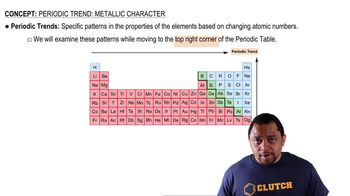
Periodic Trends

Periodic trends refer to the predictable patterns observed in the properties of elements as you move across or down the periodic table. These trends include atomic radius, electronegativity, ionization energy, and reactivity. Understanding these trends helps in predicting the behavior and similarities between elements based on their positions in the periodic table.
Video consigliato:
Percorso guidato
00:38
Periodic Trends

Group vs. Period Similarities

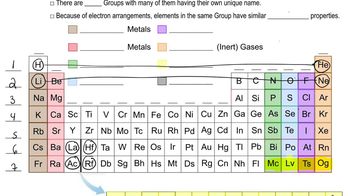
Elements in the same group (column) of the periodic table share similar chemical properties due to having the same number of valence electrons. This similarity often leads to comparable reactivity and bonding characteristics. In contrast, elements in the same period (row) may have different properties as they have different valence electron configurations.
Video consigliato:
Percorso guidato
05:33
Periodic Table: Group Names

Metallic vs. Nonmetallic Character

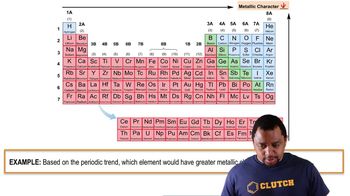
The metallic and nonmetallic character of elements influences their properties and reactivity. Metals, typically found on the left side of the periodic table, are good conductors of heat and electricity, while nonmetals, located on the right, are generally poor conductors and have higher electronegativities. Understanding this distinction is crucial for predicting how elements will interact with one another.
Video consigliato:
Percorso guidato
00:56
Metallic Character Example