Ch.7 - Thermochemistry
Tro - Chemistry: A Molecular Approach 5th Edition
Tro5th EditionChemistry: A Molecular ApproachISBN: 9780134874371Non è quello che usi tu?Cambia libro di testo
Capitolo 7, Problema 106

Hydrogen and methanol have both been proposed as alternatives to hydrocarbon fuels. Use standard enthalpies of formation to calculate the amount of heat released per kilogram of methanol fuel and per kilogram of hydrogen fuel.

Guida verificata passo dopo passo
1
Identify the chemical reactions for the combustion of methanol (CH₃OH) and hydrogen (H₂).
Write the balanced chemical equations for the combustion reactions: CH₃OH + 1.5O₂ → CO₂ + 2H₂O and 2H₂ + O₂ → 2H₂O.
Use standard enthalpies of formation (ΔH_f°) to calculate the enthalpy change (ΔH_rxn) for each reaction. ΔH_rxn = ΣΔH_f°(products) - ΣΔH_f°(reactants).
Determine the molar mass of methanol and hydrogen to convert the enthalpy change from per mole to per kilogram.
Calculate the heat released per kilogram by dividing the enthalpy change by the molar mass for each fuel.

Concetti chiave

Ecco i concetti essenziali che devi comprendere per rispondere correttamente alla domanda.

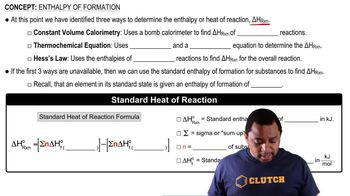
Standard Enthalpy of Formation

The standard enthalpy of formation is the change in enthalpy when one mole of a compound is formed from its elements in their standard states. It is a crucial value used in thermodynamics to calculate the heat released or absorbed during chemical reactions. For fuels like methanol and hydrogen, these values help determine their energy content and efficiency as alternatives to hydrocarbon fuels.
Video consigliato:
Percorso guidato
02:34
Enthalpy of Formation

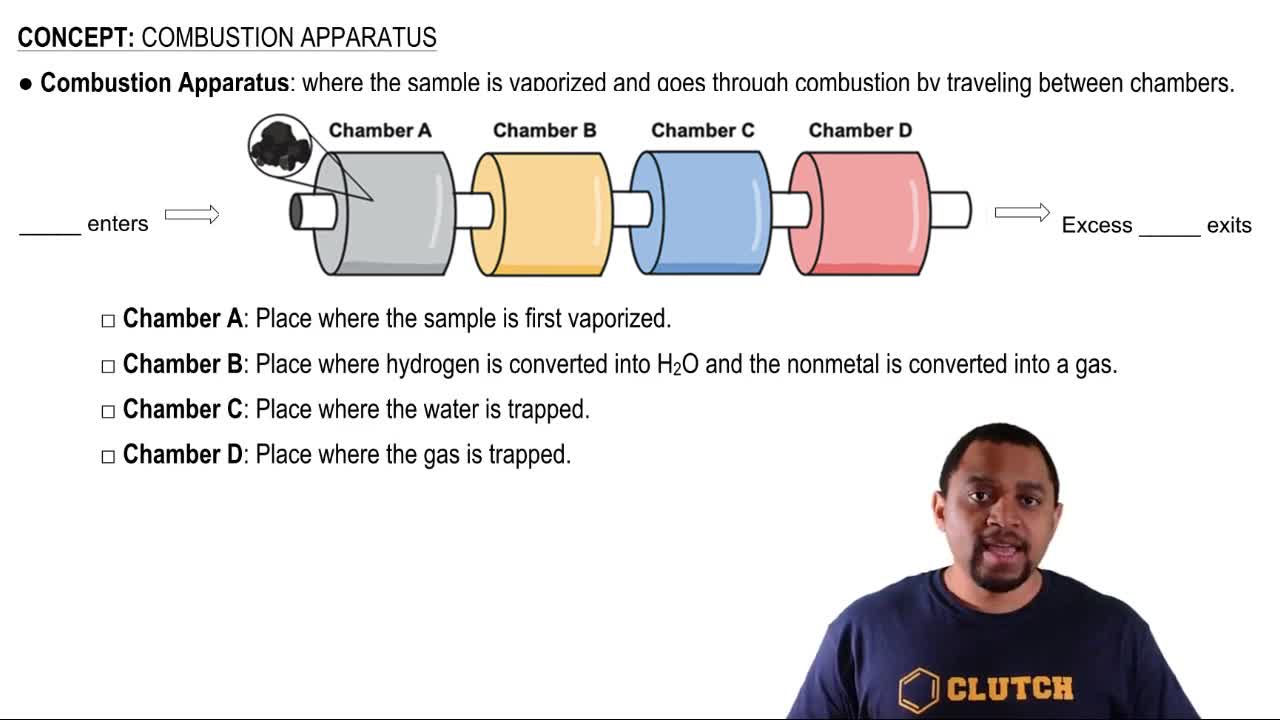
Heat of Combustion

The heat of combustion is the amount of energy released when a substance undergoes complete combustion with oxygen. This value is essential for evaluating the energy efficiency of fuels. By comparing the heat of combustion of methanol and hydrogen, one can assess which fuel releases more energy per kilogram, aiding in the selection of alternative fuels.
Video consigliato:
Percorso guidato
02:24
Combustion Apparatus

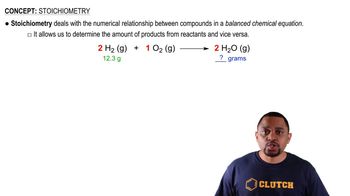
Stoichiometry

Stoichiometry involves the calculation of reactants and products in chemical reactions based on the balanced chemical equations. It is vital for determining the amount of heat released per kilogram of fuel, as it allows for the conversion of moles of fuel to mass and the calculation of energy changes during combustion. Understanding stoichiometry is essential for accurate thermodynamic calculations in fuel analysis.
Video consigliato:
Percorso guidato
01:16
Stoichiometry Concept
Pratica correlata
Domanda del libro di testo

Hydrogen and methanol have both been proposed as alternatives to hydrocarbon fuels. How does the energy of these fuels compare to that of octane (C8H18)? 

693
views
Domanda del libro di testo

Palmitic acid (C16H32O2) is a dietary fat found in beef and butter. The caloric content of palmitic acid is typical of fats in general. Write a balanced equation for the complete combustion of palmitic acid and calculate the standard enthalpy of combustion. What is the caloric content of palmitic acid in Cal/g? The standard enthalpy of formation of palmitic acid is -208 kJ/mol and that of sucrose is -2226.1 kJ/mol. [Use H2O(l) in the balanced chemical equations because the metabolism of these compounds produces liquid water.]

1902
views
Domanda del libro di testo

Under certain nonstandard conditions, oxidation by O2(g) of 1 mol of SO2(g) to SO3(g) absorbs 89.5 kJ. The enthalpy of formation of SO3(g) is –204.2 kJ under these conditions. Find the enthalpy of formation of SO2(g).

3259
views
Domanda del libro di testo

Hydrogen and methanol have both been proposed as alternatives to hydrocarbon fuels. Which fuel contains the most energy in the least mass?

603
views
Domanda del libro di testo

Palmitic acid (C16H32O2) is a dietary fat found in beef and butter. The caloric content of palmitic acid is typical of fats in general. Which dietary substance (sugar or fat) contains more Calories per gram? The standard enthalpy of formation of palmitic acid is -208 kJ/mol and that of sucrose is -2226.1 kJ/mol. [Use H2O(l) in the balanced chemical equations because the metabolism of these compounds produces liquid water.]

824
views