Ch.1 - Matter, Measurement & Problem Solving
Tro - Chemistry: A Molecular Approach 6th Edition
Tro6th EditionChemistry: A Molecular ApproachISBN: 9780137832217Non è quello che usi tu?Cambia libro di testo
Capitolo 1, Problema 121

A thief uses a can of sand to replace a solid gold cylinder that sits on a weight-sensitive, alarmed pedestal. The can of sand and the gold cylinder have exactly the same dimensions (length = 22 and radius = 3.8 cm). a. Calculate the mass of each cylinder (ignore the mass of the can itself). (density of gold = 19.3 g/cm3, density of sand = 3.00 g/cm3) b. Does the thief set off the alarm? Explain.

Guida verificata passo dopo passo
1
Calculate the volume of the cylinder using the formula for the volume of a cylinder: \( V = \pi r^2 h \), where \( r \) is the radius and \( h \) is the height.
Substitute the given dimensions (radius = 3.8 cm, height = 22 cm) into the volume formula to find the volume of the cylinder.
Calculate the mass of the gold cylinder using the formula: \( \text{mass} = \text{density} \times \text{volume} \), with the density of gold given as 19.3 g/cm³.
Calculate the mass of the sand cylinder using the same mass formula, with the density of sand given as 3.00 g/cm³.
Compare the masses of the gold and sand cylinders to determine if the difference in mass would set off the weight-sensitive alarm.

Risposta video verificata per un problema simile:

Questa soluzione video è stata consigliata dai nostri tutor come utile per risolvere questo problema.
Durata del video:
4m

Concetti chiave

Ecco i concetti essenziali che devi comprendere per rispondere correttamente alla domanda.

Density

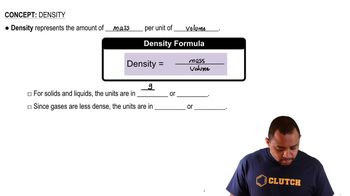
Density is defined as mass per unit volume and is a crucial property of materials. It is calculated using the formula density = mass/volume. In this scenario, knowing the densities of gold and sand allows us to determine their respective masses based on their identical volumes, which is essential for solving the problem.
Video consigliato:
Percorso guidato
01:56
Density Concepts

Volume of a Cylinder

The volume of a cylinder can be calculated using the formula V = πr²h, where r is the radius and h is the height. Since both the gold cylinder and the can of sand have the same dimensions, this formula will yield the same volume for both, allowing for a direct comparison of their masses based on density.
Video consigliato:
Percorso guidato
02:35
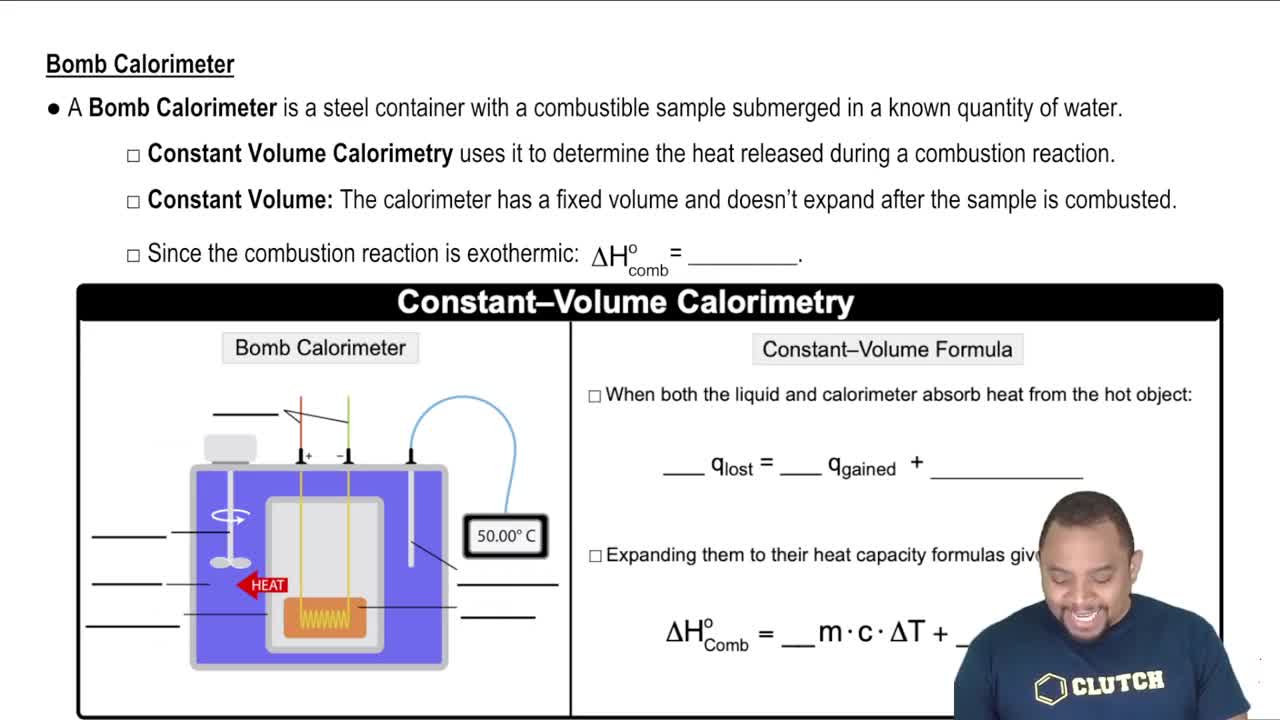
Constant-Volume Calorimetry

Mass Comparison and Alarm Mechanism

The alarm mechanism is sensitive to changes in mass on the pedestal. By calculating the masses of both the gold cylinder and the can of sand, we can determine if the thief's substitution will trigger the alarm. If the mass of the sand is less than that of the gold, the alarm will be set off, indicating the theft.
Video consigliato:
Percorso guidato
2:38
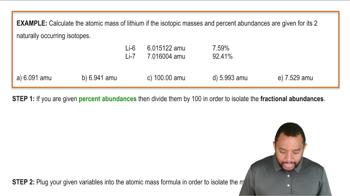
Atomic Mass Comparison Example