Ch.1 - Matter, Measurement & Problem Solving
Tro - Chemistry: A Molecular Approach 6th Edition
Tro6th EditionChemistry: A Molecular ApproachISBN: 9780137832217Non è quello che usi tu?Cambia libro di testo
Capitolo 1, Problema 62c

Complete the table. c. 554 mK/s _____K/s _____mK/ms

Guida verificata passo dopo passo
1
Step 1: Understand the units involved. We have millikelvin per second (mK/s) and need to convert to kelvin per second (K/s) and millikelvin per millisecond (mK/ms).
Step 2: Convert 554 mK/s to K/s. Remember that 1 K = 1000 mK, so divide 554 mK/s by 1000 to convert to K/s.
Step 3: Convert 554 mK/s to mK/ms. Since 1 second = 1000 milliseconds, divide 554 mK/s by 1000 to convert to mK/ms.
Step 4: Write down the conversions: 554 mK/s = 0.554 K/s and 554 mK/s = 0.554 mK/ms.
Step 5: Verify the conversions by checking the unit relationships: 1 K = 1000 mK and 1 s = 1000 ms, ensuring the calculations are consistent with these conversions.

Risposta video verificata per un problema simile:

Questa soluzione video è stata consigliata dai nostri tutor come utile per risolvere questo problema.
Durata del video:
2m

Concetti chiave

Ecco i concetti essenziali che devi comprendere per rispondere correttamente alla domanda.

Unit Conversion

Unit conversion is the process of converting a quantity expressed in one set of units to another. In this case, it involves converting millikelvins per second (mK/s) to kelvins per second (K/s) and millikelvins per millisecond (mK/ms). Understanding the relationships between these units is essential for accurate conversions.
Video consigliato:
Percorso guidato
01:56
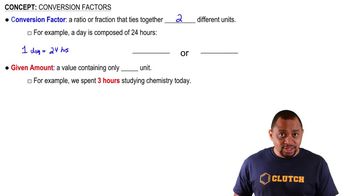
Conversion Factors

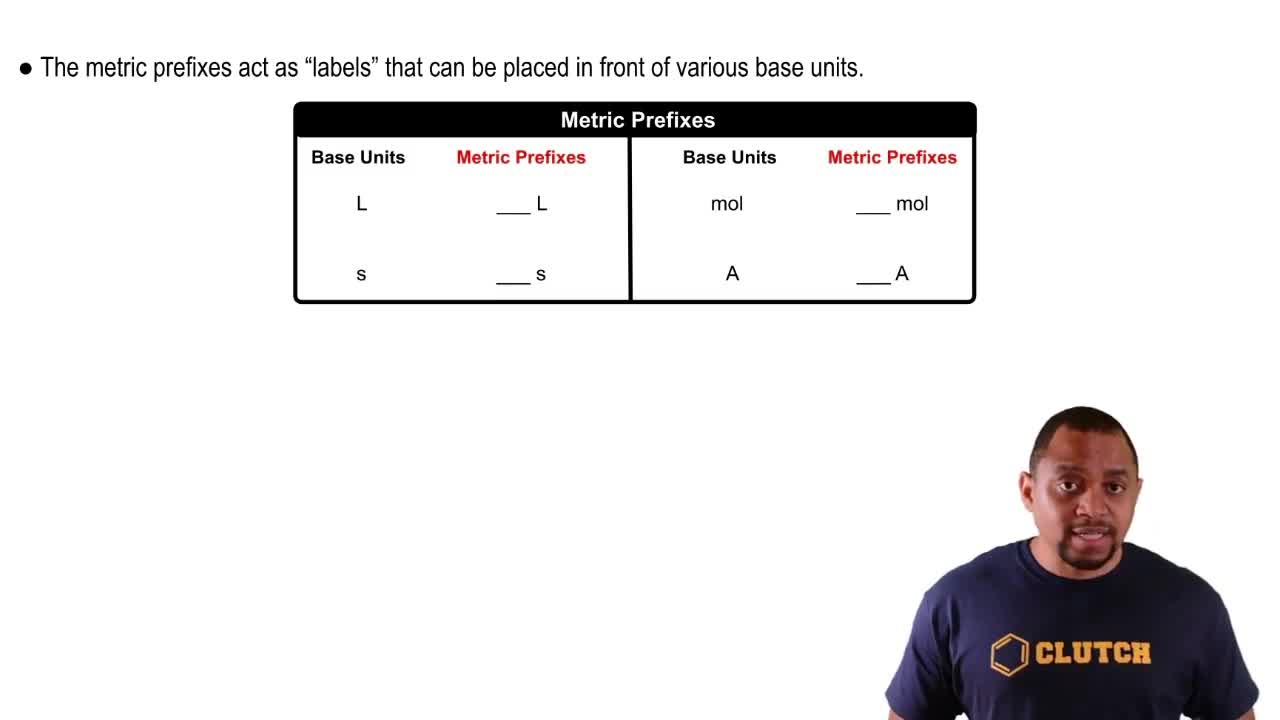
Metric Prefixes

Metric prefixes are used to denote multiples or fractions of units in the metric system. For example, 'milli-' indicates a factor of 10^-3. Recognizing these prefixes helps in understanding how to convert between different scales, such as converting mK to K or mK/ms to K/s.
Video consigliato:
Percorso guidato
01:16
Metric Prefixes Usage

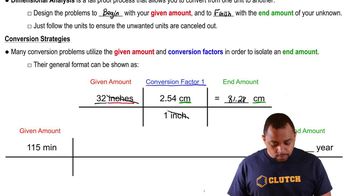
Dimensional Analysis

Dimensional analysis is a mathematical technique used to convert units by multiplying by conversion factors that equal one. This method ensures that the units cancel appropriately, leading to the desired unit. It is a crucial skill in chemistry for ensuring that calculations involving different units are performed correctly.
Video consigliato:
Percorso guidato
06:11
Dimensional Analysis