Domanda del libro di testo
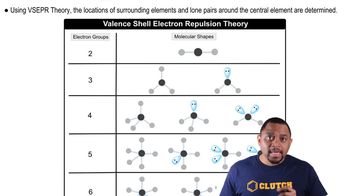
Determine the geometry about each interior atom in each molecule and sketch the molecule. (Skeletal structure is indicated in parentheses.) a. CH3OH (H3COH) b. CH3OCH3 (H3COCH3)
427
views

 Tro 6th EditionCh.11 - Chemical Bonding II: Molecular Shapes, VSEPR & MO TheoryProblema 42c
Determine the molecular geometry about each interior atom and sketch each molecule. c. N2H4 (skeletal structure H2NNH2)
 Guida verificata passo dopo passo
 02:13
02:13
 00:51
00:51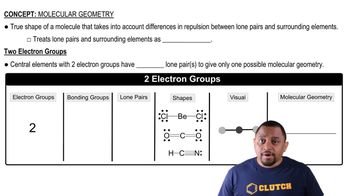 01:33
01:33Determine the geometry about each interior atom in each molecule and sketch the molecule. (Skeletal structure is indicated in parentheses.) a. CH3OH (H3COH) b. CH3OCH3 (H3COCH3)
Each ball-and-stick model shows the electron and molecular geometry of a generic molecule. Explain what is wrong with each molecular geometry and provide the correct molecular geometry, given the number of lone pairs and bonding groups on the central atom. (c)
Determine the geometry about each interior atom in each molecule and sketch the molecule. (Skeletal structure is indicated in parentheses.) c. H2O2 (HOOH)
Determine the molecular geometry about each interior atom and sketch each molecule. a. N2
Determine the molecular geometry about each interior atom and draw each molecule. (Skeletal structure is indicated in parentheses.)
a. C2H2 (skeletal structure HCCH)
b. C2H4 (skeletal structure H2CCH2)
c. C2H6 (skeletal structure H3CCH3)
Determine the molecular geometry about each interior atom and sketch each molecule. b. N2H2 (skeletal structure HNNH)