
Domanda del libro di testo
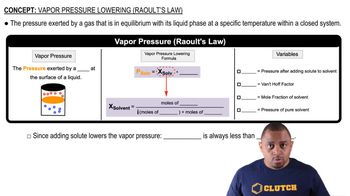
The vapor pressure of water at 25 °C is 23.76 torr. If 0.25 g of water is enclosed in a 1.50-L container, will any liquid be present? If so, what mass of liquid?

 Guida verificata passo dopo passo
 02:40
02:40
 01:15
01:15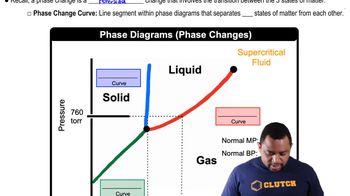 03:22
03:22The vapor pressure of water at 25 °C is 23.76 torr. If 0.25 g of water is enclosed in a 1.50-L container, will any liquid be present? If so, what mass of liquid?
Air conditioners not only cool air, but dry it as well. A room in a home measures 6.0 m × 10.0 m × 2.2 m. If the outdoor temperature is 30 °C and the partial pressure of water in the air is 85% of the vapor pressure of water at this temperature, what mass of water must be removed from the air each time the volume of air in the room is cycled through the air conditioner? (Assume that all of the water must be removed from the air.) The vapor pressure for water at 30 °C is 31.8 torr.
A sample of steam with a mass of 0.552 g and at a temperature of 100 °C condenses into an insulated container holding 4.25 g of water at 5.0 °C. Assuming that no heat is lost to the surroundings, what is the final temperature of the mixture?
Explain the observed trend in the melting points of the hydrogen halides.
HI -50.8 °C
HBr -88.5 °C
HCl -114.8 °C
HF -83.1 °C
Explain the observed trend in the boiling points of these compounds.
H2Te -2 °C
H2Se -41.5 °C
H2S -60.7 °C
H2O 100 °C