A solution contains one or more of the following ions: Hg22+, Ba2+, and Fe2+. When you add potassium chloride to the solution, a precipitate forms. The precipitate is filtered off, and you add potassium sulfate to the remaining solution, producing no precipitate. When you add potassium carbonate to the remaining solution, a precipitate forms. Write net ionic equations for the formation of each of the precipitates observed.

Tro 6th Edition
Ch.5 - Introduction to Solutions and Aqueous Solutions
Problema 103A hydrochloric acid solution will neutralize a sodium hydroxide solution. Look at the molecular views showing one beaker of HCl and four beakers of NaOH. Which NaOH beaker will just neutralize the HCl beaker? Begin by writing a balanced chemical equation for the neutralization reaction.
Guida verificata passo dopo passo
Risposta video verificata per un problema simile:
Concetti chiave
Neutralization Reaction
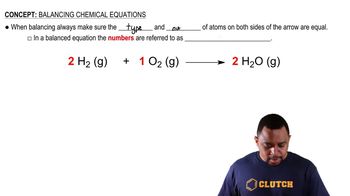
Balanced Chemical Equation
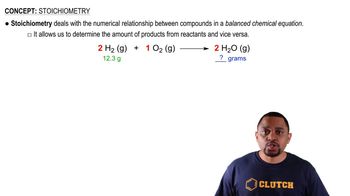
Stoichiometry
A solution contains one or more of the following ions: Ag+ , Ca2+ , and Cu2+ . When you add sodium chloride to the solution, no precipitate forms. When you add sodium sulfate to the solution, a white precipitate forms. You filter off the precipitate and add sodium carbonate to the remaining solution, producing another precipitate. Write net ionic equations for the formation of each of the precipitates observed.
A solution contains one or more of the following ions: Hg22+ , Ba2+ , and Fe2+ . When you add potassium chloride to the solution, a precipitate forms. The precipitate is filtered off, and you add potassium sulfate to the remaining solution, producing no precipitate. When you add potassium carbonate to the remaining solution, a precipitate forms. Which ions were present in the original solution?