
A kilogram of aluminum metal and a kilogram of water are each warmed to 75 °C and placed in two identical insulated containers. One hour later, the two containers are opened and the temperature of each substance is measured. The aluminum has cooled to 35 °C, while the water has cooled only to 66 °C. Explain this difference.
Ch.7 - Thermochemistry

Tro6th EditionChemistry: A Molecular ApproachISBN: 9780137832217Non è quello che usi tu?Cambia libro di testo
Capitolo 7, Problema 47
We pack two identical coolers for a picnic, placing 24 12-ounce soft drinks and five pounds of ice in each. However, the drinks that we put into cooler A were refrigerated for several hours before they were packed in the cooler, while the drinks that we put into cooler B were at room temperature. When we open the two coolers three hours later, most of the ice in cooler A is still present, while nearly all of the ice in cooler B has melted. Explain this difference.
Guida verificata passo dopo passo1
Understand the concept of heat transfer: Heat transfer occurs when there is a temperature difference between two objects or substances. In this scenario, the heat from the soft drinks and the surrounding environment will transfer to the ice, causing it to melt.
Recognize the initial temperature difference: The drinks in cooler A were refrigerated, meaning they started at a lower temperature compared to the room temperature drinks in cooler B. This temperature difference affects the rate of heat transfer to the ice.
Analyze the heat absorption by the ice: Since the drinks in cooler A are colder, they will absorb less heat from the ice compared to the warmer drinks in cooler B. This results in a slower melting rate of the ice in cooler A.
Consider the role of insulation and cooler efficiency: Both coolers are identical and should have the same insulating properties. This means that the difference in ice melting is primarily due to the temperature of the drinks rather than the coolers’ performance.
Conclude the effect of drink temperature on ice melting: The refrigerated drinks in cooler A help maintain a lower overall temperature inside the cooler, reducing the rate of ice melting. In contrast, the warmer drinks in cooler B raise the internal temperature, accelerating the ice melting process.

Risposta video verificata per un problema simile:
Questa soluzione video è stata consigliata dai nostri tutor come utile per risolvere questo problema.
Durata del video:
1mConcetti chiave
Ecco i concetti essenziali che devi comprendere per rispondere correttamente alla domanda.
Heat Transfer
Heat transfer is the process by which thermal energy moves from one object to another due to a temperature difference. In this scenario, the warmer drinks in cooler B transfer heat to the ice, causing it to melt more quickly. In contrast, the colder drinks in cooler A have less thermal energy to transfer, allowing the ice to remain solid for a longer period.
Video consigliato:
Percorso guidato
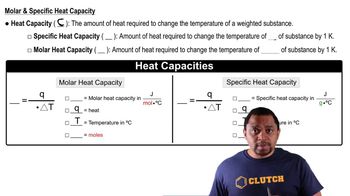
Heat Capacity
Specific Heat Capacity
Specific heat capacity is the amount of heat required to raise the temperature of a unit mass of a substance by one degree Celsius. The drinks in cooler A, being pre-cooled, have a lower initial temperature, which means they require less heat to reach equilibrium with the surrounding environment. This property helps maintain the ice's solid state longer in cooler A compared to the warmer drinks in cooler B.
Video consigliato:
Percorso guidato
Heat Capacity
Phase Change and Latent Heat
Phase change refers to the transition of a substance from one state of matter to another, such as from solid to liquid. Latent heat is the energy absorbed or released during this process without a change in temperature. In cooler B, the ice absorbs a significant amount of heat from the warmer drinks to melt, while in cooler A, the ice absorbs less heat due to the lower temperature of the drinks, resulting in less melting.
Video consigliato:
Percorso guidato
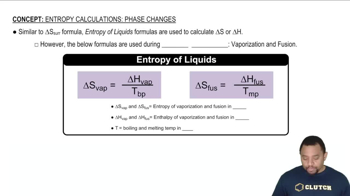
Entropy in Phase Changes
Pratica correlata
Domanda del libro di testo
1214
views
Domanda del libro di testo
A system releases 511 kJ of heat and does 125 kJ of work on the surroundings. What is the change in internal energy of the system?
2
views
Domanda del libro di testo
How much heat is required to warm 2.50 L of water from 25.0 °C to 100.0 °C? (Assume a density of 1.0 g/mL for the water.)
1
views
Domanda del libro di testo
The air in an inflated balloon (defined as the system) warms over a toaster and absorbs 142 J of heat. As it expands, it does 46 kJ of work. What is the change in internal energy for the system?
1
views
Domanda del libro di testo
How much heat is required to warm 2.50 kg of sand from 25.0 °C to 100.0 °C?
1
views
Domanda del libro di testo
A system absorbs 225 kJ of heat and the surroundings do 121 kJ of work on the system. What is the change in internal energy of the system?
1
views
