 Indietro
Fundamentals of Genetics
 03:45
03:45
Termini in questo insieme (20)
DNA (deoxyribonucleic acid) is found in the nucleus and contains instructions for the organism. It has a helical structure and is bound by histone proteins.
RNA (ribonucleic acid) is a nucleic acid involved in protein synthesis and gene expression.
A gene is a specific sequence of DNA (or RNA in some viruses) that contains instructions to make proteins or functional RNA molecules. It is the basic unit of heredity.
In eukaryotes, genes are on chromosomes inside the nucleus. In prokaryotes, genes are on a single circular DNA molecule in the cytoplasm.
A human cell has about 20,000-25,000 genes spread across 23 pairs of chromosomes.
Dominant genes are expressed and visible in the individual, while recessive genes are present but not necessarily expressed.
Genetics studies genes, heredity, variation, how traits are inherited, gene expression, mutations, and genetic interactions.
The genome is the complete set of DNA/RNA in an organism, including all genes and noncoding sequences, representing the entire genetic material.
Genomics is the study of the entire genome and how genes interact with each other and the environment, with applications in medicine, biotechnology, and agriculture.
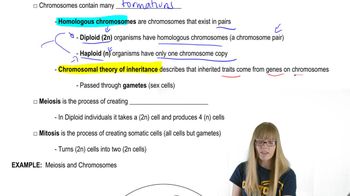
Chromosomes are long threadlike structures made of DNA and proteins (mostly histones) that carry genes arranged linearly. Humans have 46 chromosomes (23 pairs).
Unequal chromosome distribution can cause syndromes, such as Down syndrome caused by an extra chromosome 21.
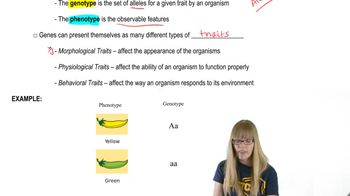
Traits are observable or measurable characteristics of an organism, which can be inherited or influenced by the environment.
Phenotype is the physical expression or observable characteristic of a trait, resulting from the interaction of genotype and environment.
Genotype is the genetic makeup of an organism, representing the genetic recipe for traits.
Replication is the process of producing an identical copy of DNA.
Transcription is the process where DNA is copied into messenger RNA (mRNA) inside the nucleus.
Translation is when mRNA is read by ribosomes in the cytoplasm to assemble amino acids into proteins based on codons.
Proteins act as enzymes, hormones, structural components, and signaling molecules, determining traits and carrying out life processes.
The hemoglobin gene codes for hemoglobin protein, which transports oxygen in red blood cells. Mutations can alter the protein and affect the trait.
DNA contains the instructions for cell function and reproduction; without it, cells cannot operate properly, leading to disease.