Ch. 19 - Epigenetics
Klug - Concepts of Genetics 12th Edition
Klug12th EditionConcepts of GeneticsISBN: 9780135564776Non è quello che usi tu?Cambia libro di testo
Capitolo 19, Problema 9

What are the similarities and differences in the two types of ncRNAs involved in epigenetic control of gene expression?

Guida verificata passo dopo passo
1
Step 1: Identify the two main types of non-coding RNAs (ncRNAs) involved in epigenetic control, typically microRNAs (miRNAs) and long non-coding RNAs (lncRNAs).
Step 2: Describe the similarities by explaining that both miRNAs and lncRNAs regulate gene expression without coding for proteins and can influence chromatin structure and gene silencing.
Step 3: Explain the differences by focusing on their size (miRNAs are about 20-24 nucleotides long, while lncRNAs are longer than 200 nucleotides) and their mechanisms of action (miRNAs mainly act post-transcriptionally by targeting mRNAs, whereas lncRNAs can act at multiple levels including chromatin remodeling, transcriptional regulation, and post-transcriptional control).
Step 4: Discuss how miRNAs typically guide the RNA-induced silencing complex (RISC) to degrade or inhibit translation of target mRNAs, while lncRNAs can recruit chromatin-modifying complexes to specific genomic loci to alter epigenetic marks.
Step 5: Summarize by highlighting that both types of ncRNAs contribute to epigenetic regulation but differ in their molecular size, modes of action, and specific roles in gene expression control.

Risposta video verificata per un problema simile:

Questa soluzione video è stata consigliata dai nostri tutor come utile per risolvere questo problema.
Durata del video:
1m

Concetti chiave

Ecco i concetti essenziali che devi comprendere per rispondere correttamente alla domanda.

Non-coding RNAs (ncRNAs)

Non-coding RNAs are RNA molecules that do not code for proteins but play crucial roles in regulating gene expression. They include various types such as microRNAs (miRNAs) and long non-coding RNAs (lncRNAs), which influence gene activity through different mechanisms, including epigenetic modifications.
Video consigliato:

Epigenetic Control of Gene Expression

Epigenetic control refers to heritable changes in gene expression that do not involve alterations in the DNA sequence. This regulation often involves chemical modifications like DNA methylation and histone modification, which can be guided or influenced by ncRNAs to activate or silence genes.
Video consigliato:
Percorso guidato
02:09
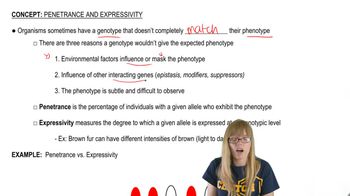
Penetrance and Expressivity

Types of ncRNAs in Epigenetic Regulation

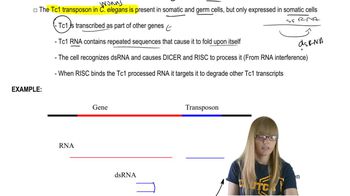
Two main types of ncRNAs involved in epigenetic regulation are microRNAs (miRNAs) and long non-coding RNAs (lncRNAs). miRNAs typically regulate gene expression post-transcriptionally by degrading mRNA or inhibiting translation, while lncRNAs can recruit chromatin-modifying complexes to specific genomic loci, affecting chromatin state and gene expression.
Video consigliato: