Ch. 20 - Recombinant DNA Technology
Klug - Concepts of Genetics 12th Edition
Klug12th EditionConcepts of GeneticsISBN: 9780135564776Non è quello che usi tu?Cambia libro di testo
Capitolo 20, Problema 10

In 1975, the Asilomar Conference on Recombinant DNA was organized by Paul Berg, a pioneer of recombinant DNA technology, at a conference center at Asilomar State Beach in California. Physicians, scientists, lawyers, ethicists, and others gathered to draft guidelines for safe applications of recombinant DNA technology. These general guidelines were adopted by the federal government and are still in practice today. Consider the implications of recombinant DNA as a new technology. What concerns might the scientific community have had then about recombinant DNA technology? Might those same concerns exist today?

Guida verificata passo dopo passo
1
span>Recombinant DNA technology involves combining DNA from different organisms, which can lead to the creation of genetically modified organisms (GMOs). This was a groundbreaking advancement in genetics, but it also raised several concerns.
span>One major concern at the time of the Asilomar Conference was the potential for unintended consequences, such as the creation of harmful organisms that could escape into the environment and disrupt ecosystems.
span>Another concern was the ethical implications of genetic manipulation, including the potential for misuse in creating 'designer' organisms or humans, which could lead to ethical and social dilemmas.
span>There were also worries about the safety of laboratory workers and the public, as the technology was new and the long-term effects were unknown. This led to the development of strict safety guidelines and containment procedures.
span>Today, while many of these concerns still exist, advancements in technology and regulatory frameworks have addressed some of these issues. However, ethical and ecological concerns continue to be relevant as the technology evolves.

Risposta video verificata per un problema simile:

Questa soluzione video è stata consigliata dai nostri tutor come utile per risolvere questo problema.
Durata del video:
5m

Concetti chiave

Ecco i concetti essenziali che devi comprendere per rispondere correttamente alla domanda.

Recombinant DNA Technology

Recombinant DNA technology involves combining DNA from different organisms to create new genetic combinations. This technique allows scientists to manipulate genes, enabling advancements in medicine, agriculture, and biotechnology. The ability to insert, delete, or modify genes raises ethical and safety concerns, particularly regarding potential environmental impacts and biosecurity risks.
Video consigliato:
Percorso guidato
03:51
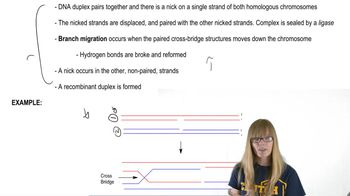
Recombination after Single Strand Breaks

Ethical Considerations

The ethical considerations surrounding recombinant DNA technology include issues of consent, potential misuse, and the long-term effects on ecosystems and human health. At the Asilomar Conference, participants discussed the moral implications of altering genetic material, emphasizing the need for responsible research practices. These concerns remain relevant today as advancements in genetic engineering continue to evolve.
Video consigliato:
Percorso guidato
07:11
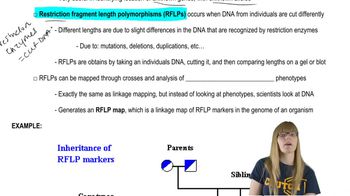
Mapping with Markers

Regulatory Framework

A regulatory framework is essential for overseeing the safe use of recombinant DNA technology. The guidelines established at the Asilomar Conference laid the groundwork for federal regulations that govern genetic research and applications. Ongoing discussions about regulation focus on balancing innovation with safety, ensuring that scientific advancements do not pose undue risks to society or the environment.
Video consigliato:
Percorso guidato
02:39
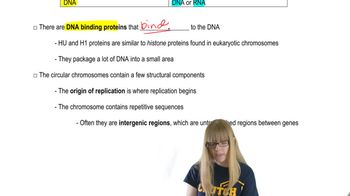
Bacteria and Viral Chromosome Structure
Pratica correlata
Domanda del libro di testo

What are the advantages of using a restriction enzyme whose recognition site is relatively rare? When would you use such enzymes?

842
views
Domanda del libro di testo

Restriction sites are palindromic; that is, they read the same in the 5' to 3' direction on each strand of DNA. What is the advantage of having restriction sites organized this way?

854
views
Domanda del libro di testo

List the advantages and disadvantages of using plasmids as cloning vectors. What advantages do BACs and YACs provide over plasmids as cloning vectors?

1343
views
Domanda del libro di testo

In the context of recombinant DNA technology, of what use is a probe?

850
views
Domanda del libro di testo

If you performed a PCR experiment starting with only one copy of double-stranded DNA, approximately how many DNA molecules would be present in the reaction tube after 15 cycles of amplification?

742
views
Domanda del libro di testo

In a control experiment, a plasmid containing a HindIII recognition sequence within a kanamycin resistance gene is cut with HindIII, re-ligated, and used to transform E. coli K12 cells. Kanamycin-resistant colonies are selected, and plasmid DNA from these colonies is subjected to electrophoresis. Most of the colonies contain plasmids that produce single bands that migrate at the same rate as the original intact plasmid. A few colonies, however, produce two bands, one of original size and one that migrates much less far down the gel. Diagram the origin of this slow band as a product of ligation.

614
views