Ch. 21 - Genomic Analysis
Klug - Concepts of Genetics 12th Edition
Klug12th EditionConcepts of GeneticsISBN: 9780135564776Non è quello che usi tu?Cambia libro di testo
Capitolo 21, Problema 25a

Whole-exome sequencing (WES) is helping physicians diagnose a genetic condition that has defied diagnosis by traditional means. The implication here is that exons in the nuclear genome are sequenced in the hopes that, by comparison with the genomes of nonaffected individuals, a diagnosis might be revealed.
What are the strengths and weaknesses of this approach?

Guida verificata passo dopo passo
1
Step 1: Understand what Whole-Exome Sequencing (WES) entails. WES focuses on sequencing only the exons, which are the protein-coding regions of the nuclear genome. These regions represent about 1-2% of the entire genome but contain a large proportion of known disease-causing mutations.
Step 2: Identify the strengths of WES. Since it targets exons, WES is cost-effective compared to whole-genome sequencing, allows for easier data analysis due to smaller data size, and is highly useful for detecting mutations that alter protein sequences, which are often responsible for genetic diseases.
Step 3: Consider the weaknesses of WES. WES does not capture non-coding regions such as introns, regulatory elements, and intergenic regions, which can also harbor disease-causing variants. Additionally, WES may miss structural variants, copy number variations, and mutations in poorly captured or highly repetitive regions.
Step 4: Reflect on the diagnostic implications. WES can provide a diagnosis when traditional methods fail by identifying rare or novel coding mutations, but it may not detect all genetic causes due to its limited scope, so negative results do not rule out a genetic condition.
Step 5: Summarize by weighing the trade-offs. WES is a powerful tool for diagnosing many genetic disorders efficiently and economically, but its limitations mean that sometimes further testing, such as whole-genome sequencing or other molecular analyses, may be necessary for a comprehensive diagnosis.

Risposta video verificata per un problema simile:

Questa soluzione video è stata consigliata dai nostri tutor come utile per risolvere questo problema.
Durata del video:
1m

Concetti chiave

Ecco i concetti essenziali che devi comprendere per rispondere correttamente alla domanda.

Whole-Exome Sequencing (WES)

WES is a genomic technique that sequences all the protein-coding regions (exons) of genes in the nuclear genome. Since exons represent about 1-2% of the genome but harbor a majority of known disease-causing mutations, WES is efficient for identifying genetic variants linked to diseases. It is less costly and data-intensive than whole-genome sequencing but focuses only on coding regions.
Video consigliato:
Percorso guidato
08:55
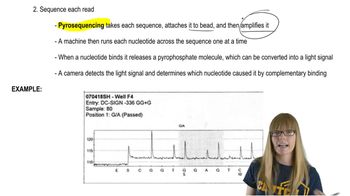
Sequencing Overview

Strengths of WES in Genetic Diagnosis

WES allows for the detection of rare or novel mutations in coding regions that may explain undiagnosed genetic conditions. It is particularly useful when traditional tests fail, enabling comprehensive analysis of many genes simultaneously. This approach can identify single nucleotide variants, small insertions, and deletions that affect protein function.
Video consigliato:
Percorso guidato
03:45
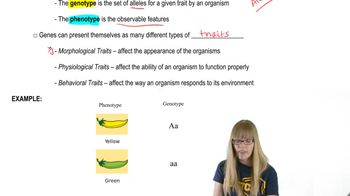
Descriptive Genetics

Limitations of WES

WES does not capture non-coding regions, structural variants, or epigenetic changes that may contribute to disease. It may miss mutations in poorly covered exons or regions with complex sequences. Additionally, interpreting variants of uncertain significance can be challenging, and incidental findings unrelated to the condition may arise.
Video consigliato:
Percorso guidato
07:56
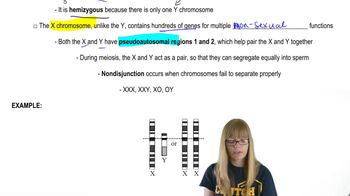
Sex-Linked Genes
Pratica correlata
Domanda del libro di testo

Homology can be defined as the presence of common structures because of shared ancestry. Homology can involve genes, proteins, or anatomical structures. As a result of 'descent with modification,' many homologous structures have adapted different purposes.

Under what circumstances might one expect proteins of similar function to not share homology? Would you expect such proteins to be homologous at the level of DNA sequences?

513
views
Domanda del libro di testo

Comparisons between human and chimpanzee genomes indicate that a gene that may function as a wild-type or normal gene in one primate may function as a disease-causing gene in another [The Chimpanzee Sequencing and Analysis Consortium (2005). Nature 437:69–87]. For instance, the PPARG locus (regulator of adipocyte differentiation) is a wild-type allele in chimps but is clearly associated with Type 2 diabetes in humans. What factors might cause this apparent contradiction? Would you consider such apparent contradictions to be rare or common? What impact might such findings have on the use of comparative genomics to identify and design therapies for disease-causing genes in humans?

814
views
Domanda del libro di testo

Genomic sequencing has opened the door to numerous studies that help us understand the evolutionary forces shaping the genetic makeup of organisms. Using databases containing the sequences of 25 genomes, scientists examined the relationship between GC content and global amino acid composition [Kreil, D. P., and Ouzounis, C. A. (2001) Nucl. Acids Res. 29:1608–1615]. They found that it is possible to identify thermophilic species on the basis of their amino acid composition alone, which suggests that evolution in a hot environment selects for a certain whole organism amino acid composition. In what way might evolution in extreme environments influence genome and amino acid composition? How might evolution in extreme environments influence the interpretation of genome sequence data?

518
views
Domanda del libro di testo

Whole-exome sequencing (WES) is helping physicians diagnose a genetic condition that has defied diagnosis by traditional means. The implication here is that exons in the nuclear genome are sequenced in the hopes that, by comparison with the genomes of nonaffected individuals, a diagnosis might be revealed.

If you were ordering WES for a patient, would you also include an analysis of the patient's mitochondrial genome?

657
views
Domanda del libro di testo

Recall that when the HGP was completed, more than 40 percent of the genes identified had unknown functions. The PANTHER database provides access to comprehensive and current functional assignments for human genes (and genes from other species).

Go to http://www.pantherdb.org/data/. In the frame on the left side of the screen locate the 'Quick links' and use the 'Whole genome function views' link to a view of a pie chart of current functional classes for human genes. Mouse over the pie chart to answer these questions. What percentage of human genes encode transcription factors? Cytoskeletal proteins? Transmembrane receptor regulatory/adaptor proteins?

811
views