Ch. 22 - Applications of Genetic Engineering and Biotechnology
Klug - Concepts of Genetics 12th Edition
Klug12th EditionConcepts of GeneticsISBN: 9780135564776Non è quello che usi tu?Cambia libro di testo
Capitolo 22, Problema 1a

What experimental evidence confirms that we have introduced a useful gene into a transgenic organism and that it performs as we anticipate?

Guida verificata passo dopo passo
1
Step 1: Begin by identifying the transgenic organism and the gene of interest that has been introduced. This involves understanding the purpose of the gene and the expected phenotype or function it should confer to the organism.
Step 2: Use molecular techniques such as PCR (Polymerase Chain Reaction) or Southern blotting to confirm the presence of the introduced gene in the organism's genome. These methods detect specific DNA sequences and verify successful integration.
Step 3: Assess the expression of the introduced gene by analyzing mRNA levels using techniques like RT-PCR (Reverse Transcription PCR) or Northern blotting. This step ensures that the gene is actively transcribed into RNA.
Step 4: Evaluate protein production by performing Western blotting or ELISA (Enzyme-Linked Immunosorbent Assay) to confirm that the gene is translated into its corresponding protein. This step verifies functional expression at the protein level.
Step 5: Conduct phenotypic or functional assays to determine if the transgenic organism exhibits the anticipated traits or behaviors. For example, if the gene confers resistance to a specific pathogen, test the organism's resistance under controlled conditions.

Risposta video verificata per un problema simile:

Questa soluzione video è stata consigliata dai nostri tutor come utile per risolvere questo problema.
Durata del video:
34s

Concetti chiave

Ecco i concetti essenziali che devi comprendere per rispondere correttamente alla domanda.

Transgenic Organisms

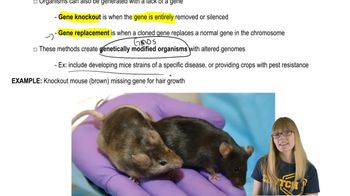
Transgenic organisms are those that have been genetically modified to contain a gene or genes from another species. This process involves techniques such as gene cloning and transformation, allowing for the introduction of specific traits. Understanding how these organisms are created and the implications of their genetic modifications is crucial for evaluating their functionality and utility.
Video consigliato:
Percorso guidato
09:12
Transgenic Organisms and Gene Therapy

Gene Expression Analysis

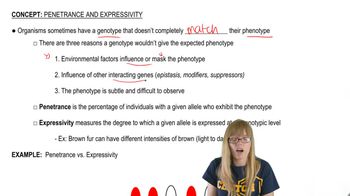
Gene expression analysis involves measuring the activity of a gene to determine if it is being expressed in the transgenic organism. Techniques such as quantitative PCR, Northern blotting, or RNA sequencing can be used to assess the presence and levels of mRNA, indicating whether the introduced gene is functioning as intended. This analysis is essential for confirming the successful integration and activity of the transgene.
Video consigliato:
Percorso guidato
02:09
Penetrance and Expressivity

Phenotypic Assessment

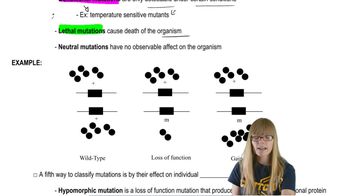
Phenotypic assessment refers to the evaluation of observable traits or characteristics in an organism. In the context of transgenic organisms, this involves assessing whether the introduced gene produces the expected traits, such as increased resistance to pests or enhanced growth rates. By comparing the phenotypes of transgenic organisms with non-transgenic controls, researchers can determine the effectiveness of the genetic modification.
Video consigliato:
Percorso guidato
10:48
Mutations and Phenotypes