Ch. 24 - Cancer Genetics
Klug - Concepts of Genetics 12th Edition
Klug12th EditionConcepts of GeneticsISBN: 9780135564776Non è quello che usi tu?Cambia libro di testo
Capitolo 24, Problema 16

Explain why many oncogenic viruses contain genes whose products interact with tumor-suppressor proteins.

Guida verificata passo dopo passo
1
Understand that oncogenic viruses are viruses that can cause cancer by altering the normal regulation of cell growth.
Recognize that tumor-suppressor proteins are crucial in regulating the cell cycle and preventing uncontrolled cell division.
Identify that many oncogenic viruses have evolved to contain genes that produce proteins capable of interacting with and inhibiting tumor-suppressor proteins.
Consider that by interacting with tumor-suppressor proteins, these viral proteins can disrupt normal cell cycle control, leading to unregulated cell proliferation.
Acknowledge that this interaction can contribute to the transformation of normal cells into cancerous cells, as the inhibition of tumor-suppressor proteins removes critical checks on cell growth.

Risposta video verificata per un problema simile:

Questa soluzione video è stata consigliata dai nostri tutor come utile per risolvere questo problema.
Durata del video:
2m

Concetti chiave

Ecco i concetti essenziali che devi comprendere per rispondere correttamente alla domanda.

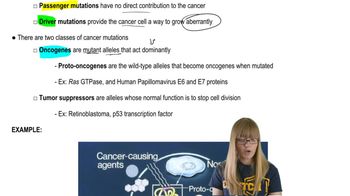
Oncogenic Viruses

Oncogenic viruses are viruses that can cause cancer in host organisms. They often integrate their genetic material into the host's genome, leading to the alteration of normal cellular functions. This can result in uncontrolled cell growth and division, a hallmark of cancer. Understanding how these viruses operate is crucial for studying their role in tumorigenesis.
Video consigliato:
Percorso guidato
04:46
Cancer Mutations

Tumor-Suppressor Proteins

Tumor-suppressor proteins are crucial for regulating cell growth and preventing tumor formation. They function by repairing DNA, controlling the cell cycle, and promoting apoptosis (programmed cell death). When these proteins are inactivated or mutated, the regulatory mechanisms fail, allowing cells to proliferate uncontrollably. Many oncogenic viruses produce proteins that can inhibit these tumor-suppressor functions.
Video consigliato:

Protein-Protein Interactions

Protein-protein interactions are essential for many cellular processes, including signal transduction and regulation of the cell cycle. Oncogenic viruses often encode proteins that mimic or bind to tumor-suppressor proteins, disrupting their normal function. This interference can lead to the evasion of growth control mechanisms, contributing to the development of cancer. Understanding these interactions is key to developing targeted therapies.
Video consigliato: