Ch. 24 - Cancer Genetics
Klug - Concepts of Genetics 12th Edition
Klug12th EditionConcepts of GeneticsISBN: 9780135564776Non è quello che usi tu?Cambia libro di testo
Capitolo 24, Problema 1c

How do we know that cancer cells contain defects in DNA repair?

Guida verificata passo dopo passo
1
Understand that DNA repair mechanisms are essential for maintaining genome integrity by correcting DNA damage that occurs naturally or due to environmental factors.
Recognize that cancer cells often exhibit a high rate of mutations and genomic instability, which suggests a failure in the normal DNA repair processes.
Examine experimental evidence where cancer cells show increased sensitivity to DNA-damaging agents, indicating defects in their ability to repair DNA.
Study specific genetic mutations found in cancer cells that affect key DNA repair genes, such as BRCA1 and BRCA2, which are known to be involved in homologous recombination repair.
Analyze laboratory assays that measure DNA repair efficiency, such as comet assays or reporter assays, which demonstrate reduced repair capacity in cancer cells compared to normal cells.

Risposta video verificata per un problema simile:

Questa soluzione video è stata consigliata dai nostri tutor come utile per risolvere questo problema.
Durata del video:
1m

Concetti chiave

Ecco i concetti essenziali che devi comprendere per rispondere correttamente alla domanda.

DNA Repair Mechanisms

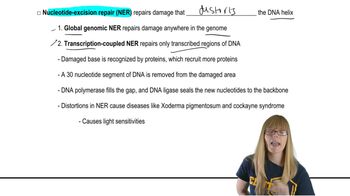
DNA repair mechanisms are cellular processes that identify and correct damage to the DNA structure. These include pathways like nucleotide excision repair, base excision repair, and mismatch repair, which maintain genomic integrity by fixing mutations that could otherwise lead to cell malfunction or disease.
Video consigliato:
Percorso guidato
05:44
Repair Pathways

Genomic Instability in Cancer Cells

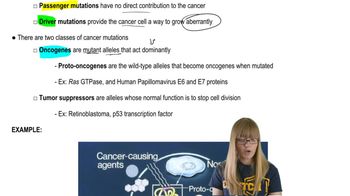
Cancer cells often exhibit genomic instability, characterized by increased mutations and chromosomal abnormalities. This instability suggests defects in DNA repair pathways, as the inability to properly fix DNA damage leads to accumulation of mutations that drive cancer progression.
Video consigliato:
Percorso guidato
04:46
Cancer Mutations

Experimental Evidence Linking DNA Repair Defects to Cancer

Studies show that many cancers have mutations in genes responsible for DNA repair, such as BRCA1/2. Laboratory assays demonstrate reduced repair capacity in cancer cells, and inherited DNA repair deficiencies correlate with higher cancer risk, providing direct evidence that defects in DNA repair contribute to cancer development.
Video consigliato:
Percorso guidato
05:44
Repair Pathways