 Indietro
GOB Chemistry: Conversions, Nuclear Stability, and Molecular Polarity
 03:45
03:45


Termini in questo insieme (20)
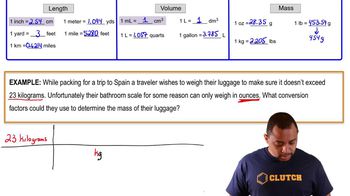
Use conversion factors based on equivalences, multiply by fractions equal to 1, and cancel units to convert from one unit to another.
The ratio of neutrons to protons and the total number of nucleons affect nuclear stability; too many or too few neutrons cause instability.
Radioactive decay is the spontaneous transformation of an unstable nucleus into a more stable one, emitting particles or radiation.
Alpha decay, beta decay, and gamma decay.
It emits an alpha particle (2 protons and 2 neutrons), decreasing the atomic number by 2 and mass number by 4.
A neutron converts into a proton and emits a beta particle (electron), increasing the atomic number by 1 without changing mass number.
Lone pairs repel bonding pairs more strongly, affecting bond angles and the overall molecular geometry.
Lone pairs compress bond angles between bonded atoms due to stronger repulsion.
Electronegativity is the tendency of an atom to attract shared electrons in a chemical bond.
A greater electronegativity difference between atoms leads to a more polar bond.
A dipole moment is a measure of the separation of positive and negative charges in a molecule, indicating bond polarity.
Molecular polarity depends on the vector sum of bond dipoles; symmetrical shapes can cancel dipoles, making molecules nonpolar.
A central atom bonded to four atoms with bond angles of about 109.5°.
Lone pairs reduce bond angles and change the shape to trigonal pyramidal or bent.
Polar molecules have an uneven distribution of charge due to polar bonds and asymmetrical shape; nonpolar molecules have symmetrical charge distribution.
Check for polar bonds and if the molecular geometry allows dipoles to cancel; if not, the molecule is polar.
Small electronegativity difference leads to nonpolar covalent bonds; moderate difference leads to polar covalent bonds; large difference leads to ionic bonds.
Half-life is the time required for half of a radioactive sample to decay, indicating the rate of decay.
Remaining amount = initial amount × (1/2)^(number of half-lives).
Valence Shell Electron Pair Repulsion (VSEPR) theory predicts molecular shapes based on electron pair repulsions.