Ch.12 Food as Fuel An Overview of Metabolism
Frost - General, Organic and Biological Chemistry 4th Edition
Frost4th EditionGeneral, Organic and Biological ChemistryISBN: 9780134988696Non è quello che usi tu?Cambia libro di testo
Capitolo 8, Problema 64c

Name the location in the cell where the following catabolic processes take place:
c. β oxidation

Guida verificata passo dopo passo
1
Understand the concept of β oxidation: β oxidation is the catabolic process by which fatty acid molecules are broken down in the cell to generate acetyl-CoA, NADH, and FADH₂, which are used in energy production.
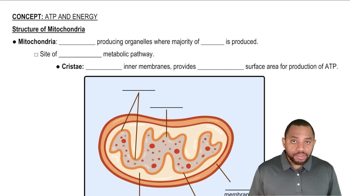
Recall the location of β oxidation in the cell: β oxidation primarily occurs in the mitochondria, specifically in the mitochondrial matrix.
Recognize the role of mitochondria: The mitochondria are often referred to as the 'powerhouse of the cell' because they are the site of many energy-generating processes, including β oxidation.
Consider the transport of fatty acids: Fatty acids must first be activated in the cytoplasm and then transported into the mitochondria via the carnitine shuttle system before undergoing β oxidation.
Summarize the process: β oxidation takes place in the mitochondrial matrix, where fatty acids are broken down into smaller units to produce energy intermediates for cellular metabolism.

Risposta video verificata per un problema simile:

Questa soluzione video è stata consigliata dai nostri tutor come utile per risolvere questo problema.
Durata del video:
3m

Concetti chiave

Ecco i concetti essenziali che devi comprendere per rispondere correttamente alla domanda.

β-oxidation

β-oxidation is a metabolic process that breaks down fatty acids into acetyl-CoA units, which can then enter the citric acid cycle for energy production. This process occurs in the mitochondria of eukaryotic cells, where fatty acids are transported after being activated in the cytoplasm.

Mitochondria

Mitochondria are membrane-bound organelles known as the powerhouses of the cell, responsible for producing ATP through oxidative phosphorylation. They play a crucial role in energy metabolism, including the β-oxidation of fatty acids, which is essential for generating energy from fats.
Video consigliato:
Percorso guidato
1:46
Structure of Mitochondria Concept 1

Catabolic processes

Catabolic processes refer to metabolic pathways that break down molecules into smaller units, releasing energy in the process. These pathways are vital for cellular respiration and energy production, allowing cells to utilize stored energy from carbohydrates, fats, and proteins.
Video consigliato:
Percorso guidato
2:25
Processing of Pre-mRNA Concept 1