Ch.12 Food as Fuel An Overview of Metabolism
Frost - General, Organic and Biological Chemistry 4th Edition
Frost4th EditionGeneral, Organic and Biological ChemistryISBN: 9780134988696Non è quello che usi tu?Cambia libro di testo
Capitolo 8, Problema 21

Name the starting reactant of glycolysis.

Guida verificata passo dopo passo
1
Understand that glycolysis is the metabolic pathway that breaks down glucose to produce energy in the form of ATP.
Recall that the starting reactant of glycolysis is the molecule that enters the pathway to undergo enzymatic reactions.
Identify that glycolysis begins with a six-carbon sugar molecule, which is a common energy source for cells.
Recognize that this six-carbon sugar is glucose, a simple carbohydrate.
Conclude that the starting reactant of glycolysis is glucose, which is converted into pyruvate through a series of enzymatic steps.

Risposta video verificata per un problema simile:

Questa soluzione video è stata consigliata dai nostri tutor come utile per risolvere questo problema.
Durata del video:
2m

Concetti chiave

Ecco i concetti essenziali che devi comprendere per rispondere correttamente alla domanda.

Glycolysis

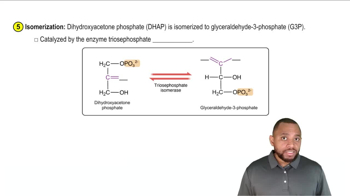
Glycolysis is a metabolic pathway that converts glucose into pyruvate, producing a small amount of ATP and NADH in the process. It occurs in the cytoplasm of cells and is the first step in cellular respiration, providing energy for cellular activities. Understanding glycolysis is essential for grasping how cells generate energy from carbohydrates.
Video consigliato:
Percorso guidato
1:26
Glycolysis Concept 5

Glucose

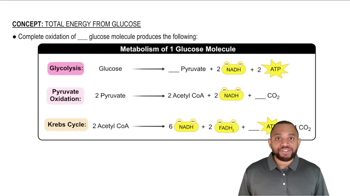
Glucose is a simple sugar and a primary energy source for cells. It is the starting reactant of glycolysis, where it undergoes a series of enzymatic reactions to be broken down into pyruvate. The availability of glucose is crucial for energy production, especially in tissues with high energy demands, such as the brain and muscles.
Video consigliato:
Percorso guidato
2:07
Total Energy From Glucose Concept 1

ATP Production

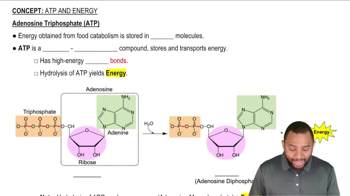
ATP (adenosine triphosphate) is the main energy currency of the cell, used to power various biological processes. During glycolysis, a net gain of two ATP molecules is produced per glucose molecule, which is vital for sustaining cellular functions. Understanding ATP production is key to comprehending how energy is harnessed and utilized in biological systems.
Video consigliato:
Percorso guidato
2:20
Adenosine Triphosphate (ATP) Concept 2