Ch.12 Food as Fuel An Overview of Metabolism
Frost - General, Organic and Biological Chemistry 4th Edition
Frost4th EditionGeneral, Organic and Biological ChemistryISBN: 9780134988696Non è quello che usi tu?Cambia libro di testo
Capitolo 8, Problema 30

The formation of lactate permits glycolysis to continue under anaerobic conditions. Explain.

Guida verificata passo dopo passo
1
Glycolysis is a metabolic pathway that converts glucose into pyruvate, generating ATP in the process.
Under aerobic conditions, pyruvate enters the mitochondria and is further oxidized in the citric acid cycle.
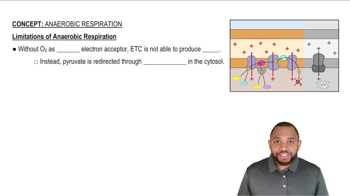
Under anaerobic conditions, oxygen is not available to accept electrons in the electron transport chain, causing a buildup of NADH.
To regenerate NAD^+ from NADH, pyruvate is reduced to lactate by the enzyme lactate dehydrogenase.
The regeneration of NAD^+ allows glycolysis to continue, as NAD^+ is a necessary cofactor for the glycolytic pathway.

Risposta video verificata per un problema simile:

Questa soluzione video è stata consigliata dai nostri tutor come utile per risolvere questo problema.
Durata del video:
4m

Concetti chiave

Ecco i concetti essenziali che devi comprendere per rispondere correttamente alla domanda.

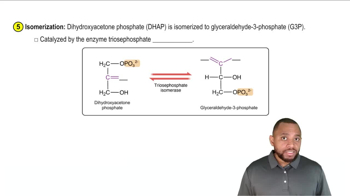
Glycolysis

Glycolysis is a metabolic pathway that converts glucose into pyruvate, producing a small amount of ATP in the process. This pathway occurs in the cytoplasm and can function under both aerobic and anaerobic conditions. In the absence of oxygen, glycolysis is crucial for energy production, as it allows cells to generate ATP quickly, albeit less efficiently than aerobic respiration.
Video consigliato:
Percorso guidato
1:26
Glycolysis Concept 5

Anaerobic Conditions

Anaerobic conditions refer to environments where oxygen is not available for cellular respiration. Under these conditions, cells must rely on anaerobic processes to generate energy. In humans, this often leads to the conversion of pyruvate into lactate, allowing glycolysis to continue and providing a temporary solution for energy production when oxygen levels are low.
Video consigliato:
Percorso guidato
1:47
Anaerobic Respiration Concept 1

Lactate Formation

Lactate formation is the process by which pyruvate is converted into lactate during anaerobic respiration. This conversion is catalyzed by the enzyme lactate dehydrogenase and serves to regenerate NAD+, which is essential for glycolysis to proceed. By producing lactate, cells can maintain ATP production even in low-oxygen environments, although this can lead to muscle fatigue and acidosis if sustained.
Video consigliato:
Percorso guidato
1:41
Amide Formation Concept 1