Ch.21 The Generation of Biochemical Energy
McMurry - Fundamentals of General, Organic, and Biological Chemistry 8th Edition
McMurry8th EditionFundamentals of General, Organic, and Biological ChemistryISBN: 9780134015187Non è quello che usi tu?Cambia libro di testo
Capitolo 21, Problema 55a

Look at the eight steps of the citric acid cycle (Figure 21.8) and answer the following questions:
a. Which steps involve oxidation reactions?

Guida verificata passo dopo passo
1
Step 1: Understand the context of the citric acid cycle. The citric acid cycle, also known as the Krebs cycle or TCA cycle, is a series of chemical reactions used by aerobic organisms to generate energy through the oxidation of acetyl-CoA. Oxidation reactions involve the loss of electrons, often accompanied by the reduction of an electron carrier such as NAD⁺ or FAD.
Step 2: Review the eight steps of the citric acid cycle. Refer to Figure 21.8 or a similar diagram of the cycle. Identify the specific steps where NAD⁺ or FAD is reduced to NADH or FADH₂, as these indicate oxidation reactions of the substrate.
Step 3: Identify the steps where NAD⁺ is reduced to NADH. These occur during the oxidation of isocitrate to α-ketoglutarate, α-ketoglutarate to succinyl-CoA, and malate to oxaloacetate. These are oxidation reactions because the substrate loses electrons.
Step 4: Identify the step where FAD is reduced to FADH₂. This occurs during the oxidation of succinate to fumarate. Again, this is an oxidation reaction because the substrate loses electrons while FAD gains them.
Step 5: Summarize the oxidation steps. The oxidation reactions in the citric acid cycle occur in the following steps: (1) isocitrate to α-ketoglutarate, (2) α-ketoglutarate to succinyl-CoA, (3) succinate to fumarate, and (4) malate to oxaloacetate. These steps involve the transfer of electrons to NAD⁺ or FAD, forming NADH or FADH₂.

Risposta video verificata per un problema simile:

Questa soluzione video è stata consigliata dai nostri tutor come utile per risolvere questo problema.
Durata del video:
3m

Concetti chiave

Ecco i concetti essenziali che devi comprendere per rispondere correttamente alla domanda.

Citric Acid Cycle

The citric acid cycle, also known as the Krebs cycle, is a series of enzymatic reactions that occur in the mitochondria, playing a crucial role in cellular respiration. It processes acetyl-CoA derived from carbohydrates, fats, and proteins into carbon dioxide and high-energy electron carriers, such as NADH and FADH2, which are essential for ATP production.
Video consigliato:
Percorso guidato
2:31
Citric Acid Cycle Summary Concept 12

Oxidation Reactions

Oxidation reactions involve the loss of electrons from a molecule, often accompanied by the addition of oxygen or the removal of hydrogen. In the context of the citric acid cycle, these reactions are vital for energy production, as they convert substrates into more oxidized forms, facilitating the transfer of electrons to electron carriers.
Video consigliato:
Percorso guidato
1:32
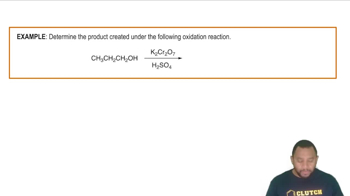
Alcohol Reactions Oxidation Reactions Example 1

Enzymatic Steps in the Cycle

The citric acid cycle consists of eight distinct enzymatic steps, each catalyzed by specific enzymes. Understanding which steps involve oxidation is crucial for grasping how energy is extracted from substrates, as these steps are where electron carriers are generated, ultimately contributing to the cell's energy economy.
Video consigliato:
Percorso guidato
5:08
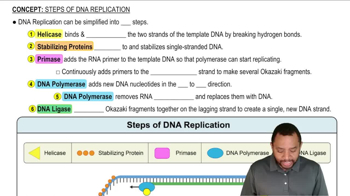
Steps of DNA Replication Concept 1