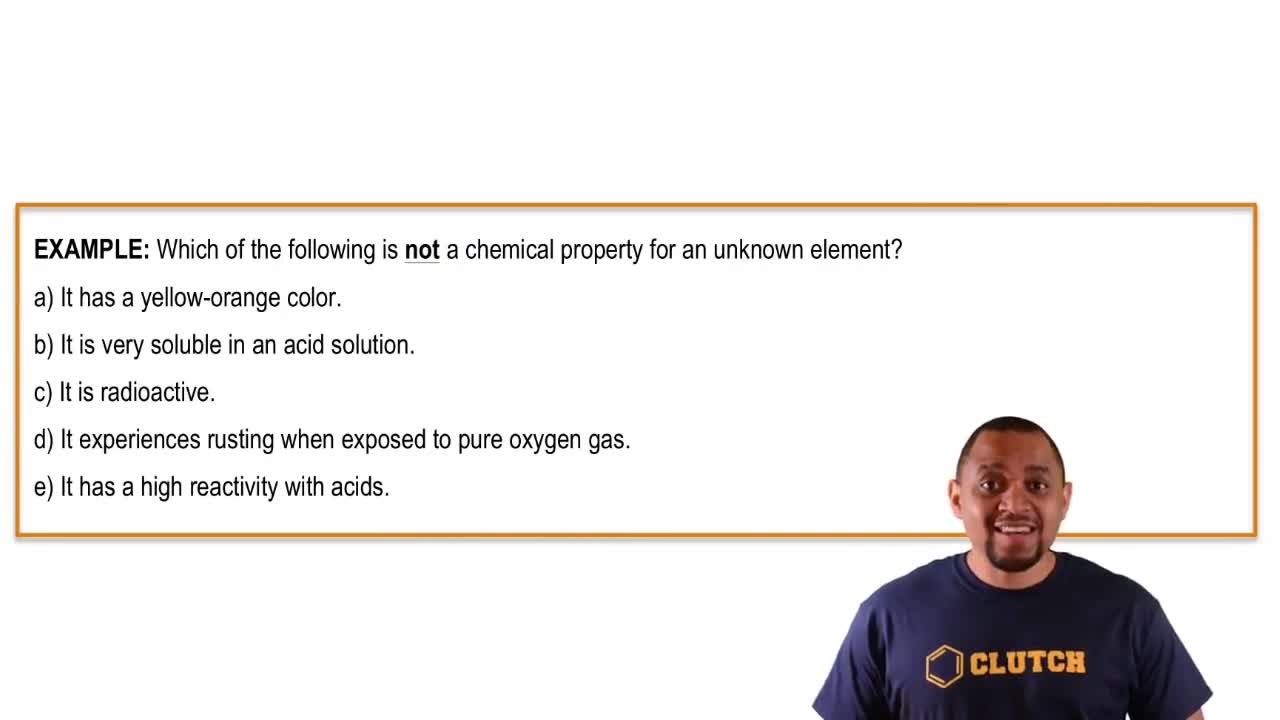
Argon has three naturally occurring isotopes, with mass numbers 36, 38, and 40.
b. How are these isotopes alike?
Guida verificata passo dopo passo
1
insert step 1
insert step 2
insert step 3
insert step 4
insert step 5
Risposta video verificata per un problema simile:
Questa soluzione video è stata consigliata dai nostri tutor come utile per risolvere questo problema.
Durata del video:
1m
Guarda un video:
0 Commenti
Concetti chiave
Ecco i concetti essenziali che devi comprendere per rispondere correttamente alla domanda.
Isotopes
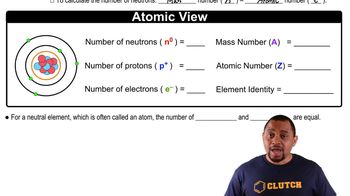
Isotopes are variants of a chemical element that have the same number of protons but different numbers of neutrons. This results in different mass numbers for each isotope. For example, argon has isotopes with mass numbers 36, 38, and 40, all of which are forms of argon but differ in their neutron count.
Isotopes of an element exhibit nearly identical chemical properties because they have the same electron configuration. This means that they participate in chemical reactions in the same way, despite differences in mass. For argon isotopes, their reactivity and behavior in chemical reactions remain consistent.
Isotopes can be stable or unstable, with stable isotopes not undergoing radioactive decay. The isotopes of argon (36, 38, and 40) are all stable, meaning they do not change into other elements over time. This stability is important for their use in various applications, such as in dating techniques and as inert gases in chemical reactions.

 1:53 minuti
 Guida verificata passo dopo passo
 04:36
04:36