Skip to main content
Introduction to Chemistry
Il mio corso
Impara
Preparazione agli esami
AI Tutor
Guide di studio
Flashcard
Esplora
Prova l'app
Il mio corso
Impara
Preparazione agli esami
AI Tutor
Guide di studio
Flashcard
Esplora
Prova l'app
Indietro
Chemical Properties definitions
Puoi toccare per girare la carta.
Chemical Property
Puoi toccare per girare la carta.
👆
Chemical Property
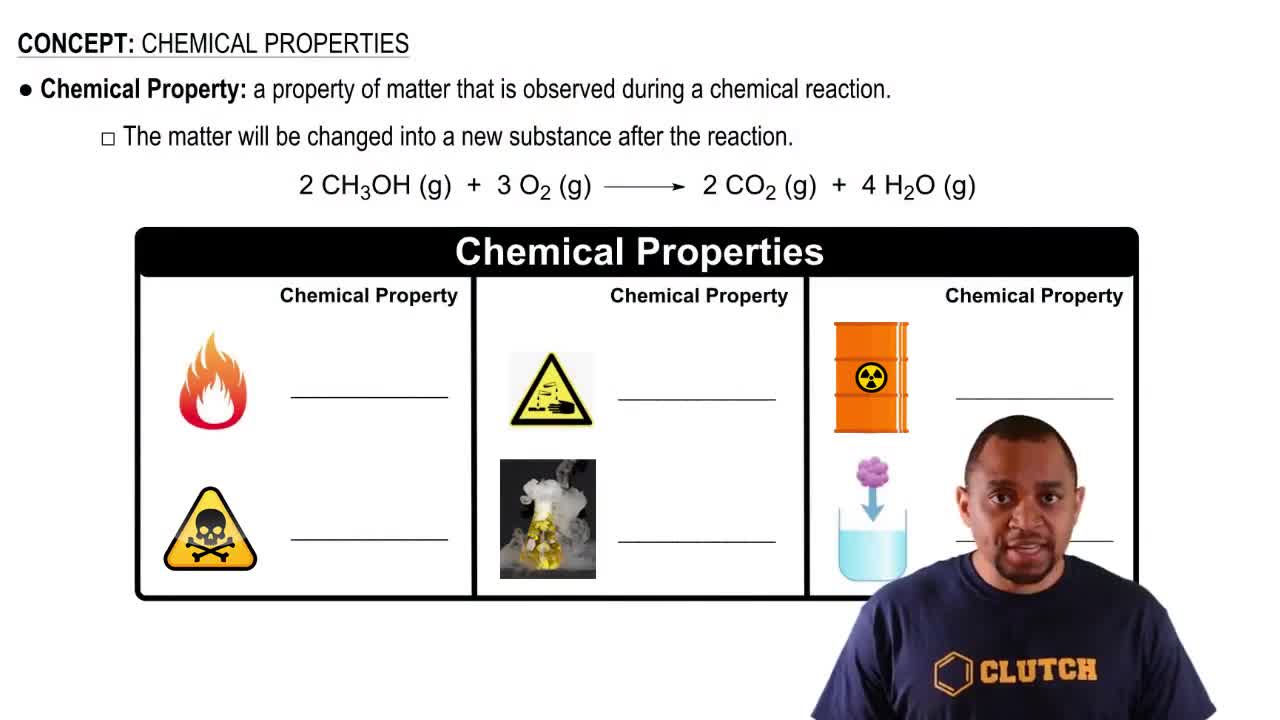
Observed only during a chemical reaction, indicating a substance's ability to change into a different substance with new composition.
Avanzamenti del tracciato
I pulsanti di controllo sono stati cambiati in modalità "navigazione".
1/13
Flashcard correlate
Pratica correlata
Video consigliati
Chemical Properties quiz #1
Chemical Properties
13 Termini
Chemical Properties
3. Matter and Energy
5 Problemi
Argomento
Physical Properties
3. Matter and Energy
5 Problemi
Argomento
3. Matter and Energy - Part 1 of 2
12 Argomenti
34 Problemi
Capitolo
3. Matter and Energy - Part 2 of 2
1 Argomento
3 Problemi
Capitolo
VideoThumbView.guidedCourse
02:17
Chemical Properties Example 1
11133
views
118
rank
VideoThumbView.guidedCourse
04:22
Chemical Properties Concept
13997
views
178
rank
Termini in questo insieme (13)
Nascondere definizioni
Chemical Property
Observed only during a chemical reaction, indicating a substance's ability to change into a different substance with new composition.
Chemical Reaction
A process where substances interact to form new substances with altered composition and identity.
Reactant
A starting material present before a chemical reaction, which undergoes transformation.
Product
A substance formed as a result of a chemical reaction, differing in composition from the starting materials.
Flammability
Describes how easily a material can ignite and sustain combustion when exposed to a flame.
Toxicity
Indicates the potential of a substance to cause harm or adverse effects to living organisms.
Corrosiveness
Describes the ability of a substance to break down or destroy materials it contacts, often through chemical action.
Reactivity
Represents the tendency of a substance to undergo chemical changes, often signaled by visible effects like bubbles or color shifts.
Radioactivity
Refers to the emission of energy or particles from unstable atomic nuclei, often marked by a specific warning symbol.
Solubility
Relates to how well a solid dissolves in a liquid, affecting the extent to which it is broken down by the solvent.
Chemical Change
An irreversible process where the composition and identity of matter are permanently altered.
Composition
The specific arrangement and types of atoms or molecules that make up a substance.
Identity
The unique set of characteristics that define a substance, which can be altered during chemical reactions.
 IndietroIndietro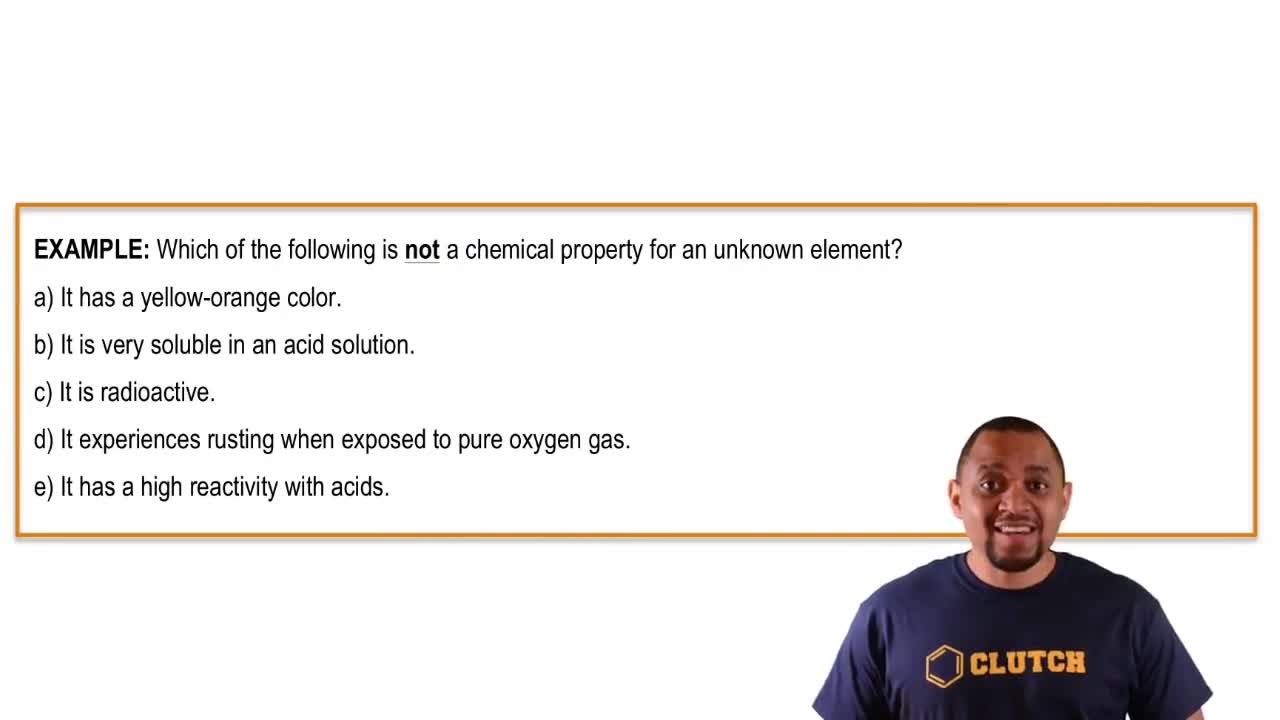
 02:17
02:17