 Indietro
Introduction to Chemistry Essentials and Atomic Structure
 00:42
00:42
Termini in questo insieme (27)
Chemistry is the study of matter, its properties, composition, and the changes it undergoes.
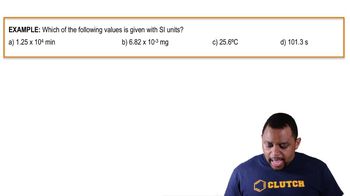
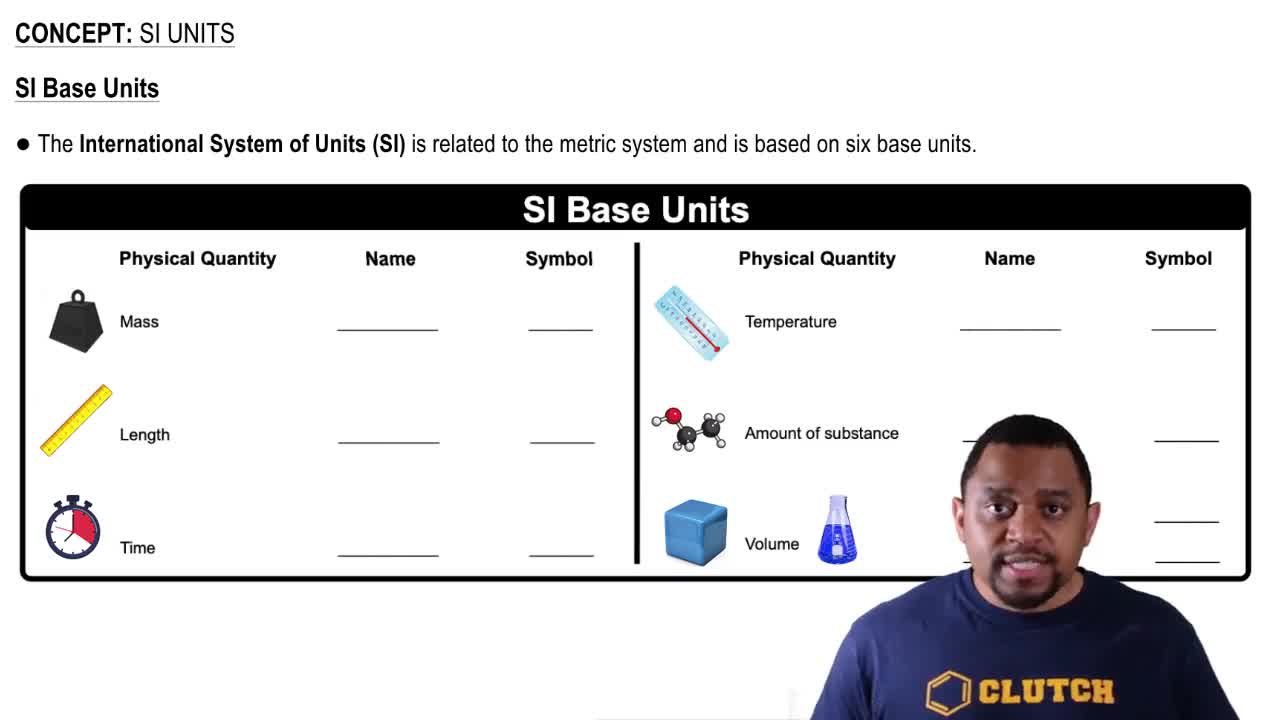
The SI units are the standard units for measurement in science, including meter (length), kilogram (mass), second (time), kelvin (temperature), mole (amount of substance), ampere (electric current), and candela (luminous intensity).
Precision refers to how close repeated measurements are to each other, while accuracy refers to how close a measurement is to the true or accepted value.
Experimental error is the difference between the measured value and the true value, caused by limitations in measurement or procedure.
Count all nonzero digits, zeros between nonzero digits, and trailing zeros if there is a decimal point; leading zeros are not significant.
Scientific notation expresses numbers as a product of a number between 1 and 10 and a power of ten; fixed notation is the standard decimal form.
For multiplication/division, the result has the same number of significant figures as the factor with the fewest; for addition/subtraction, the result has the same decimal places as the term with the fewest decimal places.
Density is the mass per unit volume of a substance, calculated as \(\rho=\frac{m}{V}\).
Dimensional analysis is a problem-solving method that uses units to help convert from one quantity to another and check calculations.
The five subfields are organic, inorganic, physical, analytical, and biochemistry.
Intensive properties do not depend on the amount of matter (e.g., density), while extensive properties depend on the amount (e.g., mass, volume).
Matter is classified as elements (pure atoms), compounds (pure substances with two or more elements), and mixtures (physical combinations of substances).
The three common states are solid, liquid, and gas, differing in shape and volume.
The law of conservation of mass states that mass is neither created nor destroyed in a chemical reaction.
Dalton’s theory includes: atoms are indivisible, atoms of an element are identical, atoms combine in whole-number ratios, and atoms rearrange in reactions.
Atomic number is the number of protons; mass number is the sum of protons and neutrons in the nucleus.
Protons = atomic number; Neutrons = mass number - atomic number; Electrons = protons ± charge.
Isotopes are atoms of the same element with different numbers of neutrons and different mass numbers.
Average atomic mass is the weighted average of isotopic masses based on their natural abundances.
A mole is the amount of substance containing exactly \(6.022\times10^{23}\) entities (Avogadro’s number).
Light exhibits both wave-like and particle-like properties, demonstrated by phenomena like interference and the photoelectric effect.
Energy \(E=h\nu\), frequency \(\nu=\frac{c}{\lambda}\), where h is Planck’s constant, c is speed of light, λ is wavelength.
The photoelectric effect is the emission of electrons from a metal surface when light of sufficient frequency shines on it.
The Bohr model describes electrons orbiting the nucleus in fixed energy levels but cannot explain atoms with more than one electron.
n: principal energy level; l: orbital shape; ml: orbital orientation; ms: electron spin.
It describes electrons as wave-like and probabilistic, occupying orbitals defined by quantum numbers rather than fixed paths.
Quantum numbers specify the energy, shape, orientation, and spin of an electron’s orbital, determining its allowed position in an atom.