 Indietro
Introduction to Chemistry - Key Concepts
 01:59
01:59
Termini in questo insieme (25)
Chemistry is the study of matter and its changes.
Science is the process of seeking understanding of nature's principles. Technology is the application of knowledge to solve problems.
Green chemistry uses materials and processes to prevent or reduce pollution at its source.
Sustainable chemistry meets present needs without compromising future generations.
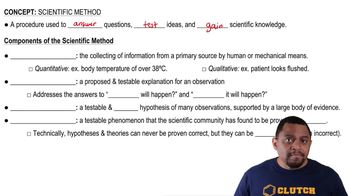
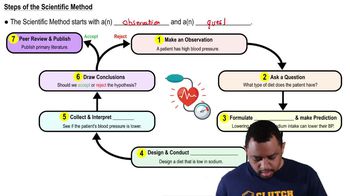
Science is testable, reproducible, explanatory, predictive, and tentative.
Inductive: specific to general. Deductive: general to specific.
A hypothesis is a testable explanation of observed data.
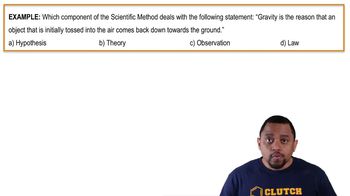
A scientific law summarizes data and describes natural phenomena, often mathematically.
A scientific theory is a set of tested hypotheses explaining natural phenomena; it is tentative and may change.
Scientific models are tangible or visual representations of invisible processes.
Risk-benefit analysis estimates a desirability quotient (DQ) as Benefits divided by Risks.
Basic research seeks knowledge for its own sake; applied research solves specific problems.
Mass is the amount of matter in an object; weight is the gravitational force on that matter.
Physical properties can be observed without changing the substance, e.g., color, mass, weight.
Chemical properties can only be observed by forming new substances.
Physical changes do not alter chemical identity; chemical changes do.
Solids have definite shape and volume; liquids definite volume but no shape; gases have neither.
Elements are pure substances made of one type of atom, represented by chemical symbols.
Compounds are substances made of two or more elements chemically combined.
Mixtures are physical blends; homogeneous are uniform, heterogeneous are not.
Mass: kilogram (kg), Length: meter (m), Volume: cubic meter (\(m^3\)), Time: second (s).
Density is mass per unit volume, calculated as \(d=\frac{m}{V}\).
Heat is energy transfer from hot to cold; temperature is average kinetic energy of particles.
Use the formula \(K=^{\circ}C+273.15\).
FLaReS stands for Falsifiability, Logic, Replicability, and Sufficiency of evidence.