 Indietro
Chapter 9
 08:35
08:35
Termini in questo insieme (20)
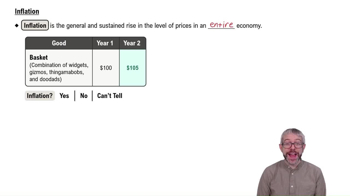
The inflation rate is the percentage increase in the overall level of prices from one year to the next.
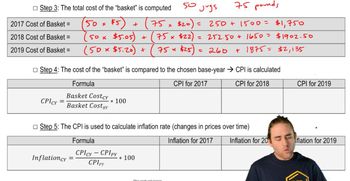
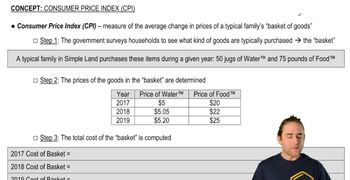
The CPI measures the cost of living by comparing the cost of a market basket of goods and services in the current year to the base year.
Inflation rate = [(CPI this year – CPI last year) / CPI last year] × 100.
Substitution bias occurs because CPI assumes consumers buy the same fixed basket, overstating the cost of living when consumers substitute cheaper goods.
Real wage = (Nominal wage / CPI) × 100, which adjusts nominal wages for inflation to reflect purchasing power.
The GDP deflator measures the price level by dividing nominal GDP by real GDP, including all final goods and services.
The PPI is an average of prices received by producers at all stages of production.
The PCE measures the price level of goods and services in GDP from the consumption category and is the Federal Reserve's preferred inflation target.
The natural rate is the unemployment rate at full employment, consisting of frictional plus structural unemployment, with no cyclical unemployment.
Frictional unemployment is short-term unemployment from the process of matching workers with jobs due to normal labor market turnover.
Structural unemployment arises from a persistent mismatch between workers' skills and job requirements caused by economic changes.
Cyclical unemployment is caused by downturns in the business cycle or recessions.
Unemployment rate = (Number of unemployed / Labor force) × 100, where labor force = employed + unemployed.
Discouraged workers are people available for work but not actively looking because they believe no jobs are available.
The employment-population ratio is the percentage of the working-age population that has jobs.
The labor force participation rate is the percentage of the working-age population that is in the labor force.
If actual inflation is higher than expected, borrowers gain and lenders lose; if lower, lenders gain and borrowers lose.
Nominal interest rate = Real interest rate + Inflation rate.
Inflation raises the cost of living and nominal incomes, redistributes income between lenders and borrowers, and causes menu costs.
Deflation causes consumers to reduce spending, waiting for lower prices, and increases the real interest rate burden on borrowers.