 Indietro
Economics unit 1
 02:08
02:08
Termini in questo insieme (21)
1. What will be produced and in what quantity?
2. How will it be produced?
3. For whom will it be produced?
Scarcity means limited resources to meet unlimited wants, forcing choices and trade-offs.
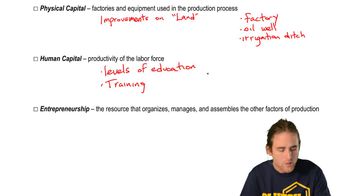
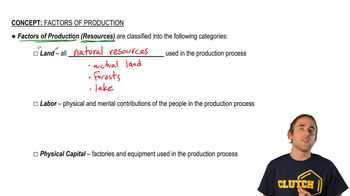
Land, Labor, Capital, and Entrepreneurship are the four factors of production.
Opportunity cost is the value of the next best alternative foregone when making a choice.
The PPC shows trade-offs and opportunity costs by illustrating maximum output combinations of two goods.
Efficiency means producing the maximum output with given resources without waste.
A free market economy relies on voluntary exchange, self-interest, and competition to answer economic questions.
The invisible hand guides resources to their most valued uses through individuals pursuing self-interest.
Incentives motivate individuals and firms to make choices that benefit themselves and the economy.
Adam Smith wrote about the invisible hand and benefits of self-interest in his 1776 book Wealth of Nations.
Capitalism causes exploitation, unemployment, poverty, and a large gap between rich and poor.
A command economy has government control over production and distribution, answering the three economic questions centrally.
Lack of incentives, inefficiency, complex planning, and little motivation for workers to improve.
A mixed economy combines elements of free markets and government intervention.
A free rider benefits from resources or services without paying, causing market failure.
Poverty exists due to unequal resource distribution, market failures, and lack of guaranteed economic security.
Externalities are costs or benefits of economic activity not reflected in market prices, often requiring government intervention.
Governments regulate, tax, or provide public goods to correct market failures like externalities and free riders.
The circular flow model illustrates how households and firms interact in product and resource markets.
Competition encourages innovation, efficiency, and better products for consumers.
Consumers express preferences by spending money, influencing which products succeed in the market.