 Indietro
Macroeconomics Chapters 1, 2, 3, 5, and 6 Key Concepts
 04:30
04:30
Termini in questo insieme (20)
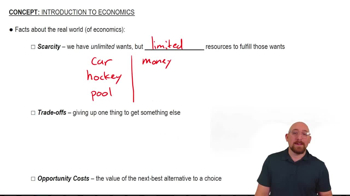
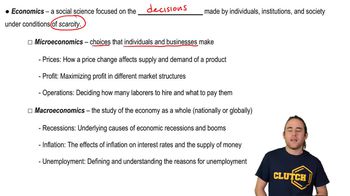
Macroeconomics studies the behavior and performance of an economy as a whole, focusing on aggregate measures like GDP, unemployment, and inflation.
GDP is the total market value of all final goods and services produced within a country in a given period.
GDP = Consumption + Investment + Government Spending + Net Exports (Exports - Imports).
Nominal GDP is measured at current prices; Real GDP is adjusted for inflation to reflect true output changes.
The unemployment rate is the percentage of the labor force that is jobless and actively seeking work.
Inflation is the sustained increase in the general price level of goods and services over time.
CPI measures the average change over time in prices paid by consumers for a market basket of goods and services.
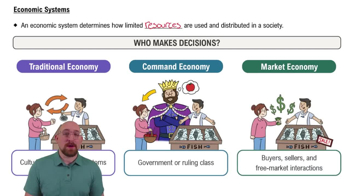
The circular flow model shows how households and firms interact in product and factor markets, exchanging goods, services, and money.
Aggregate demand is the total quantity of goods and services demanded across all levels of an economy at a given overall price level.
Aggregate supply is the total output of goods and services firms are willing to produce at different price levels.
Changes in consumer confidence, government spending, taxes, monetary policy, and net exports can shift aggregate demand.
Changes in input prices, technology, labor productivity, and government regulations can shift aggregate supply.
Fiscal policy involves government spending and taxation decisions to influence the economy.
Monetary policy is the central bank's management of the money supply and interest rates to control inflation and stabilize the economy.
The natural rate of unemployment is the long-run average rate of unemployment due to frictional and structural factors.
The Phillips Curve shows an inverse short-run relationship between inflation and unemployment.
Potential GDP is the level of output an economy can produce at full employment without causing inflation.
The multiplier effect describes how an initial change in spending leads to a larger overall change in GDP.
Crowding out occurs when increased government spending raises interest rates, reducing private investment.
The central bank controls monetary policy, regulates banks, and acts as a lender of last resort.