If you were a manufacturer of electronic pacemakers for heart implantation, which agent would you most likely use to treat your product? a. Ethanol b. Iodophor c. Glutaraldehyde d. Autoclave e. Ethylene oxide
Guida verificata passo dopo passo
1
Step 1: Understand the nature of the product to be treated. Electronic pacemakers are delicate medical devices that contain sensitive electronic components which can be damaged by heat, moisture, or harsh chemicals.
Step 2: Evaluate each sterilization or disinfection method in terms of its compatibility with electronic devices. For example, autoclaving uses high heat and steam, which can damage electronics, so it is generally unsuitable.
Step 3: Consider chemical agents like ethanol, iodophors, and glutaraldehyde. While these are effective disinfectants, they may not provide the level of sterilization required for implanted devices or may leave residues that affect device function.
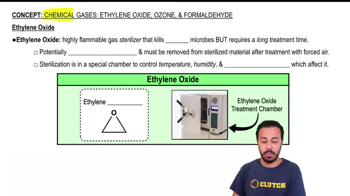
Step 4: Examine ethylene oxide gas sterilization, which is a low-temperature method that can penetrate packaging and sterilize delicate electronic equipment without causing heat damage.
Step 5: Conclude that the most appropriate agent for sterilizing electronic pacemakers is the one that ensures sterilization without damaging the device, which is typically ethylene oxide gas.
Risposta video verificata per un problema simile:
Questa soluzione video è stata consigliata dai nostri tutor come utile per risolvere questo problema.
Durata del video:
2m
Guarda un video:
0 Commenti
Concetti chiave
Ecco i concetti essenziali che devi comprendere per rispondere correttamente alla domanda.
Sterilization vs. Disinfection
Sterilization is the complete elimination of all microorganisms, including spores, while disinfection reduces or eliminates pathogenic microbes but may not destroy spores. Understanding the difference is crucial when selecting a method for medical devices that enter sterile body sites, like pacemakers.
Certain sterilization methods can damage sensitive materials. For example, heat-based methods like autoclaving can harm electronic components, so manufacturers must choose sterilization agents or processes that effectively sterilize without compromising device integrity.
Ethylene oxide is a gaseous sterilant used for heat- and moisture-sensitive medical devices. It penetrates packaging and kills all microorganisms, including spores, without damaging electronics, making it ideal for sterilizing implanted devices like pacemakers.

 2:00 minuti
 Guida verificata passo dopo passo

 05:21
05:21