Which of the following processes does not generate ATP? a. Photophosphorylation b. The Calvin-Benson cycle c. Oxidative phosphorylation d. Substrate-level phosphorylation e. All of the above generate ATP
Guida verificata passo dopo passo
1
Step 1: Understand the meaning of ATP generation in biological processes. ATP (adenosine triphosphate) is the main energy currency in cells, and it is produced through different phosphorylation mechanisms.
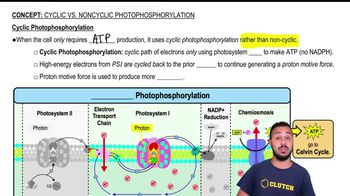
Step 2: Review each option to identify whether it involves ATP synthesis: photophosphorylation is the process in photosynthesis where light energy is used to add a phosphate group to ADP, forming ATP.
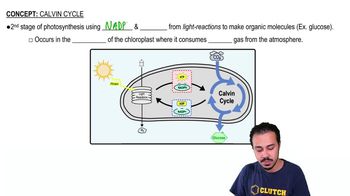
Step 3: The Calvin-Benson cycle is a series of biochemical reactions in photosynthesis that fix carbon dioxide into organic molecules; it consumes ATP rather than producing it.
Step 4: Oxidative phosphorylation is the process in cellular respiration where ATP is generated using energy released by electrons transferred through the electron transport chain.
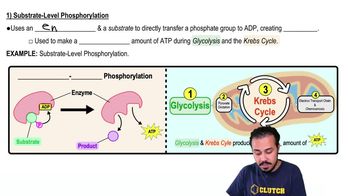
Step 5: Substrate-level phosphorylation is a direct enzymatic transfer of a phosphate group to ADP to form ATP during glycolysis and the Krebs cycle.
Risposta video verificata per un problema simile:
Questa soluzione video è stata consigliata dai nostri tutor come utile per risolvere questo problema.
Durata del video:
2m
Guarda un video:
0 Commenti
Concetti chiave
Ecco i concetti essenziali che devi comprendere per rispondere correttamente alla domanda.
Photophosphorylation
Photophosphorylation is the process by which light energy is used to generate ATP in photosynthetic organisms. It involves the transfer of electrons through a series of carriers in the thylakoid membrane, creating a proton gradient that drives ATP synthase to produce ATP.
The Calvin-Benson cycle is a series of biochemical reactions in the stroma of chloroplasts that fix carbon dioxide into organic molecules. It consumes ATP and NADPH to synthesize glucose but does not produce ATP itself.
Oxidative Phosphorylation and Substrate-Level Phosphorylation
Oxidative phosphorylation generates ATP using energy from electron transport and a proton gradient in cellular respiration. Substrate-level phosphorylation produces ATP directly by transferring a phosphate group from a high-energy substrate to ADP during metabolic reactions.

 2:11 minuti
 Guida verificata passo dopo passo
 04:36
04:36