Skip to main content
Microbiology
Il mio corso
Impara
Preparazione agli esami
AI Tutor
Guide di studio
Soluzioni per libri di testo
Flashcard
Esplora
Prova l'app
Il mio corso
Impara
Preparazione agli esami
AI Tutor
Guide di studio
Soluzioni per libri di testo
Flashcard
Esplora
Prova l'app
Indietro
Protozoan Diseases of the Digestive System quiz
Puoi toccare per girare la carta.
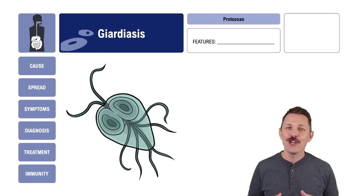
What protozoan causes giardiasis and what is its main structural feature?
Puoi toccare per girare la carta.
👆
What protozoan causes giardiasis and what is its main structural feature?
Giardiasis is caused by Giardia duodenalis, a flagellated protozoan that uses its flagella to move.
Avanzamenti del tracciato
I pulsanti di controllo sono stati cambiati in modalità "navigazione".
1/15
Flashcard correlate
Pratica correlata
Video consigliati
Protozoan Diseases of the Digestive System definitions
Protozoan Diseases of the Digestive System
15 Termini
Protozoan Diseases of the Digestive System
31. Microbial Infections - Digestive System
5 Problemi
Argomento
Helminthic Diseases of the Digestive System
31. Microbial Infections - Digestive System
4 Problemi
Argomento
31. Microbial Infections - Digestive System
5 Argomenti
12 Problemi
Capitolo
VideoThumbView.guidedCourse
03:04
Protozoan Diseases of the Digestive System Example 1
124
views
3
rank
VideoThumbView.guidedCourse
05:44
Giardiasis
134
views
3
rank
Termini in questo insieme (15)
Nascondere definizioni
What protozoan causes giardiasis and what is its main structural feature?
Giardiasis is caused by Giardia duodenalis, a flagellated protozoan that uses its flagella to move.
What are the two life stages of Giardia duodenalis?
The two life stages are the trophozoite, which attaches to the small intestine, and the cyst, which survives outside the body.
How does the cyst form of Giardia contribute to its transmission?
The cyst form is resistant to harsh environments and allows the organism to survive outside the body, facilitating fecal-oral transmission.
Why is Giardia considered partially resistant to some water treatments?
Giardia cysts are partially resistant to chlorine and UV treatments, so improper water treatment may not kill them.
What is the most common route of transmission for giardiasis?
Giardiasis is most commonly transmitted via ingestion of cysts in contaminated water through the fecal-oral route.
How can giardiasis be acquired in outdoor settings in developed countries?
It can be acquired by drinking untreated water from rivers or streams contaminated by animal feces.
What is zoonotic transmission in the context of giardiasis?
Zoonotic transmission occurs when Giardia is transmitted from animals to humans, such as through contaminated water.
What are the typical symptoms of giardiasis?
Symptoms include greasy, foul-smelling diarrhea, gas, nausea, and sometimes vomiting.
How long can symptoms of giardiasis last, and what is a potential complication of chronic infection?
Symptoms can last for weeks, and chronic infection may lead to nutrient malabsorption.
What is a distinctive characteristic of the stool in giardiasis?
The stool is often greasy and has a distinctive rotten egg smell.
How is giardiasis diagnosed in the laboratory?
Diagnosis is made by microscopic examination of feces for cysts or by antigen tests for Giardia proteins.
What are the main drugs used to treat giardiasis?
Metronidazole and nitazoxanide are the primary drugs used for treatment.
Are most people with giardiasis symptomatic or asymptomatic?
Many carriers of giardiasis are asymptomatic and may not know they are infected.
Is there a vaccine available for giardiasis?
No, there is currently no vaccine for giardiasis.
What are key prevention strategies for giardiasis, especially when traveling or camping?
Prevention includes drinking properly treated water and ensuring water is boiled or filtered when outdoors.
 IndietroIndietro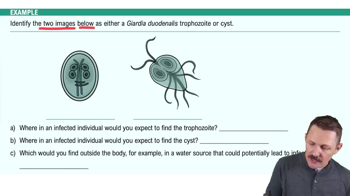
 03:04
03:04