Skip to main content
Microbiology
Il mio corso
Impara
Preparazione agli esami
AI Tutor
Guide di studio
Soluzioni per libri di testo
Flashcard
Esplora
Prova l'app
Il mio corso
Impara
Preparazione agli esami
AI Tutor
Guide di studio
Soluzioni per libri di testo
Flashcard
Esplora
Prova l'app
Indietro
Structure and Function of the Digestive System definitions
Puoi toccare per girare la carta.
Gut Microbiome
Puoi toccare per girare la carta.
👆
Gut Microbiome
Complex community of thousands of microbial species inhabiting the digestive tract, influencing health, immunity, and nutrient synthesis.
Avanzamenti del tracciato
I pulsanti di controllo sono stati cambiati in modalità "navigazione".
1/15
Flashcard correlate
Pratica correlata
Video consigliati
Structure and Function of the Digestive System quiz
Structure and Function of the Digestive System
15 Termini
Structure and Function of the Digestive System
31. Microbial Infections - Digestive System
5 Problemi
Argomento
Overview of Diseases of the Digestive System
31. Microbial Infections - Digestive System
5 Problemi
Argomento
31. Microbial Infections - Digestive System
5 Argomenti
12 Problemi
Capitolo
VideoThumbView.guidedCourse
04:54
Normal Microbiota of the Digestive Tract
176
views
4
rank
Termini in questo insieme (15)
Nascondere definizioni
Gut Microbiome
Complex community of thousands of microbial species inhabiting the digestive tract, influencing health, immunity, and nutrient synthesis.
Microbial Antagonism
Process where resident microbes occupy niches, preventing colonization by harmful organisms through competition for resources.
Normal Microbiota
Microorganisms typically present in the digestive system, contributing to health and preventing pathogen overgrowth.
Escherichia coli
Common bacterial inhabitant of the gut; certain strains are beneficial, while others can cause illness.
Bacteroides
Dominant bacterial genus in the gut, involved in vitamin production and maintenance of digestive health.
Lactobacillus
Genus of bacteria in the gut known for synthesizing B vitamins and supporting a balanced microbial environment.
Candida
Fungal genus found in the large intestine; typically harmless but can cause issues if overgrown or misplaced.
Archaea
Distinct group of microorganisms present in the gut, contributing to the diversity of the intestinal ecosystem.
Vitamin B
Essential nutrient group synthesized by gut bacteria, including folate, supplementing dietary intake.
Vitamin K
Nutrient produced by certain gut bacteria, important for blood clotting and overall health.
Immune Function
Physiological process influenced by gut microbes, which help train the immune system to distinguish friend from foe.
Body Weight Regulation
Physiological aspect affected by the gut microbiome, with changes in microbial composition linked to weight variations.
Pathogen
Harmful microorganism capable of causing disease if it overcomes the protective effects of resident microbiota.
Fecal Mass
Solid waste material, with 25-40% of its dry weight composed of microbial cells, mainly bacteria.
Streptococcus
Bacterial genus commonly found in the mouth; some species are harmless, while others can be pathogenic depending on location.
 IndietroIndietro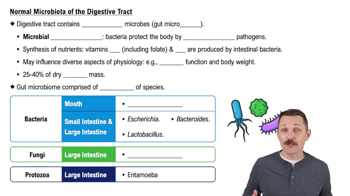
 04:54
04:54