Indietro

Bacterial Cell Wall Structures and Gram Staining

I pulsanti di controllo sono stati cambiati in modalità "navigazione".
1/24
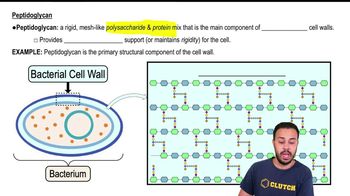
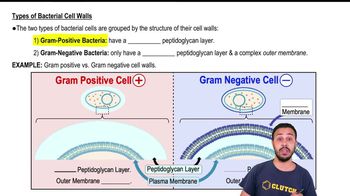
  • Does Gram-positive bacteria have a cell wall?

    Yes.

  • Does Gram-positive bacteria have an outer membrane?

    No.

  • Does Gram-positive bacteria have teichoic acids?

    Yes.

  • Does Gram-negative bacteria have a cell wall?

    Yes.

  • Does Gram-negative bacteria have an outer membrane?

    Yes.

  • Does Gram-negative bacteria have lipopolysaccharide (LPS)?

    Yes.

  • What is another name for LPS in Gram-negative bacteria?

    Endotoxin.

  • What color is Gram-negative bacteria after Gram staining?

    Pink/red.

  • Which bacteria are generally more resistant to many antibiotics: Gram-positive or Gram-negative?

    Gram-negative.

  • Why are Gram-negative bacteria more resistant to antibiotics?

    Because of their outer membrane which acts as a barrier.

  • What special substance is found in acid-fast bacterial cell walls?

    Mycolic acid.

  • Why are acid-fast bacteria hard to stain?

    Due to their waxy cell wall containing mycolic acid.

  • Why can acid-fast bacteria be difficult to treat?

    Their waxy cell wall provides protection against many drugs.

  • Does Mycoplasma have a cell wall?

    No.

  • What unique component does Mycoplasma have in its membrane?

    Sterols.

  • Why is Mycoplasma resistant to penicillin?

    Because it has no cell wall, the target of penicillin.

  • Do L-form bacteria have a normal cell wall?

    No.

  • Are L-form bacteria flexible in shape?

    Yes.

  • What does a Gram stain separate bacteria by?

    By their cell wall structure.

  • What is the first dye used in Gram staining?

    Crystal violet.

  • What is the mordant in Gram staining?

    Iodine.

  • What removes color from Gram-negative cells during Gram staining?

    Alcohol/decolorizer.

  • What is the counterstain in Gram staining?

    Safranin.

  • Why are Gram stains useful in infections?

    They help identify bacteria and guide treatment.