Skip to main content
Microbiology
Il mio corso
Impara
Preparazione agli esami
AI Tutor
Guide di studio
Soluzioni per libri di testo
Flashcard
Esplora
Prova l'app
Il mio corso
Impara
Preparazione agli esami
AI Tutor
Guide di studio
Soluzioni per libri di testo
Flashcard
Esplora
Prova l'app
Indietro
Bacterial Cell Wall Structures and Gram Staining
Puoi toccare per girare la carta.
Does Gram-positive bacteria have a cell wall?
Puoi toccare per girare la carta.
👆
Does Gram-positive bacteria have a cell wall?
Yes, Gram-positive bacteria have a cell wall.
Avanzamenti del tracciato
I pulsanti di controllo sono stati cambiati in modalità "navigazione".
1/18
Video consigliati
01:58
Peptidoglycan
3101
views
36
rank
02:44
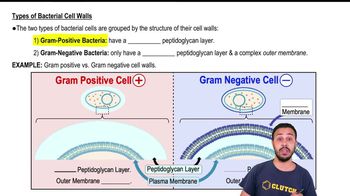
Types of Bacterial Cell Walls
2590
views
55
rank
04:44
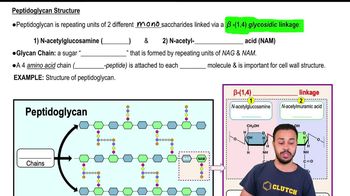
Peptidoglycan Structure
3113
views
38
rank
Termini in questo insieme (18)
Nascondere definizioni
Does Gram-positive bacteria have a cell wall?
Yes, Gram-positive bacteria have a cell wall.
Does Gram-positive bacteria have an outer membrane?
No, Gram-positive bacteria do
not
have an outer membrane.
Does Gram-positive bacteria have teichoic acids?
Yes, Gram-positive bacteria contain
teichoic acids
in their cell wall.
Does Gram-negative bacteria have a cell wall?
Yes, Gram-negative bacteria have a cell wall.
Does Gram-negative bacteria have an outer membrane?
Yes, Gram-negative bacteria have an
outer membrane
.
Does Gram-negative bacteria have LPS?
Yes, Gram-negative bacteria have
lipopolysaccharide (LPS)
in their outer membrane.
What is LPS also called?
LPS is also called
endotoxin
.
Why are Gram-negative bacteria more resistant to antibiotics?
Because of their
outer membrane
which acts as a barrier.
What special substance is found in acid-fast bacterial cell walls?
Acid-fast bacteria have
mycolic acid
in their cell walls.
Why are acid-fast bacteria hard to stain?
Because of their
waxy cell wall
containing mycolic acid.
Why can acid-fast bacteria be difficult to treat?
Their waxy cell wall provides protection, making treatment difficult.
Does Mycoplasma have a cell wall?
No, Mycoplasma bacteria do
not
have a cell wall.
What does Mycoplasma have in its membrane?
Mycoplasma membranes contain
sterols
.
Why is Mycoplasma resistant to penicillin?
Because it lacks a cell wall, penicillin is ineffective.
What does a Gram stain separate bacteria by?
Gram stain separates bacteria based on their
cell wall structure
.
What is the mordant in Gram staining?
The mordant is
iodine
, which fixes the dye.
What is the counterstain in Gram staining?
The counterstain is
safranin
.
Why are Gram stains useful for infections?
They help identify bacteria and guide appropriate treatment.
 IndietroIndietro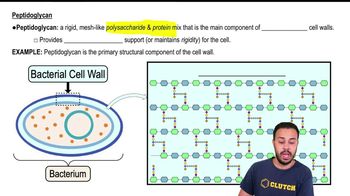
 01:58
01:58