 Indietro
Exam 1
 01:44
01:44
Termini in questo insieme (20)
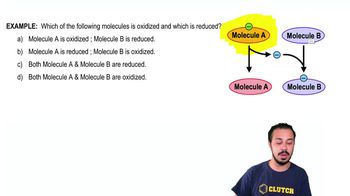
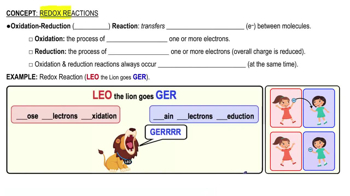
Redox reactions involve the transfer of electrons from an electron donor to an electron acceptor, where the donor is oxidized and the acceptor is reduced.
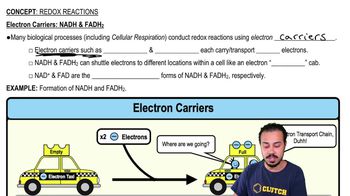
NAD+ (to NADH), NADP+ (to NADPH), and FAD (to FADH2) are key electron carriers.
Phosphorylation is the addition of an inorganic phosphate to a substrate, often to ADP to form ATP.
Substrate-level phosphorylation, oxidative phosphorylation, and photophosphorylation.
ATP production by transferring a phosphate group directly from an organic molecule to ADP.
ATP production using energy from redox reactions during respiration to create a proton motive force.
ATP production using light energy to drive the phosphorylation of ADP.
Enzymes are organic catalysts that increase the likelihood and rate of biochemical reactions without being consumed.
Hydrolases, isomerases, ligases (polymerases), lyases, oxidoreductases, and transferases.
An apoenzyme is an inactive protein enzyme without its cofactor; binding with a cofactor forms the active holoenzyme.
Cofactors are non-protein enzyme helpers; coenzymes are organic cofactors derived from vitamins.
Enzymes lower the activation energy required, speeding up the reaction without changing the overall energy change.
The enzyme's active site changes shape to more closely fit the substrate upon binding.
Temperature, pH, enzyme and substrate concentrations, and presence of inhibitors.
Substances that block enzyme activity without denaturing the enzyme; types include competitive, noncompetitive, and feedback inhibitors.
Inhibitor competes with substrate for the active site; increasing substrate concentration can overcome inhibition.
Binding of an activator at an allosteric site changes the enzyme's shape to make the active site functional.
Inhibitor binds to an allosteric site, distorting the active site and reducing or stopping enzyme activity.
The end-product of a pathway binds allosterically to an enzyme early in the pathway, shutting down further production.
Hydrolase: Lipase breaks down lipids by hydrolysis; Oxidoreductase: Lactic acid dehydrogenase oxidizes lactic acid to pyruvic acid.