 Indietro
Fundamentals of Microbiology
 03:36
03:36

Termini in questo insieme (28)
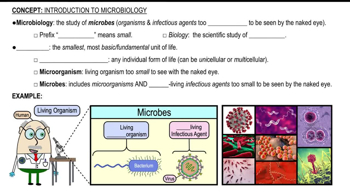
Microbiology is the study of organisms too small to be seen with the naked eye, including bacteria, archaea, fungi, protozoa, algae, viruses, and prions.
Prokaryotes are microorganisms lacking a nucleus and membrane-bound organelles, such as bacteria and archaea.
Eukaryotes are organisms with a true nucleus and organelles, including fungi, protozoa, and algae.
A pathogen is any microorganism capable of causing disease.
The human microbiome is the collective genomes of microorganisms living on and within the human body.
Pasteurization is the process of using heat to reduce microbial contamination in food and beverages.
Bioterrorism is the deliberate use of microbes or their toxins to cause harm.
Microorganisms aid digestion, synthesize vitamins, and protect against pathogens as part of the human microbiome.
Microbes drive nutrient cycles like carbon and nitrogen and are used in bioremediation to clean pollutants.
Microbes produce antibiotics, enzymes, and biopharmaceuticals such as insulin and clotting factors.
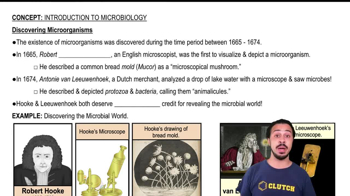
He developed simple microscopes and was the first to observe bacteria, protozoa, and algae.
He disproved spontaneous generation, developed pasteurization, and supported the Germ Theory of Disease.
Four criteria to link specific microbes to specific diseases, including isolation and reproduction of disease in a healthy host.
The theory that specific diseases are caused by specific microorganisms (pathogens).
He advocated handwashing to prevent puerperal fever, reducing infection rates.
Bacteria are unicellular prokaryotes with peptidoglycan cell walls found in diverse environments.
Archaea are prokaryotes with unique cell wall polymers and often inhabit extreme environments.
Fungi are eukaryotes with chitin cell walls, including multicellular molds and unicellular yeasts.
Single-celled eukaryotes that are motile via pseudopods, cilia, or flagella.
Viruses are acellular, obligate intracellular parasites that require a host to replicate.
The use of microbes to clean up environmental pollutants.
Microbes are genetically engineered to produce pharmaceuticals and industrial products.
Microbial fingerprints can help identify individuals or trace contamination sources.
Administration of weakened or inactivated pathogens to stimulate immunity.
The disproven theory that life arises from non-living matter.
The principle that life arises from pre-existing life.
Algae are photosynthetic eukaryotes found in fresh and salt water environments.
Parasitic worms studied due to their microscopic life cycle stages.