 Indietro
Introduction to Microbiology
 03:36
03:36

Termini in questo insieme (30)
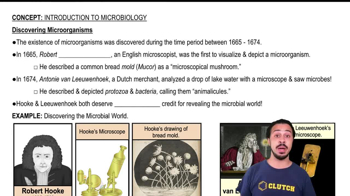
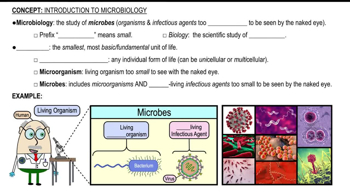
Microbiology is the study of living things too small to be seen without magnification, including bacteria, archaea, protozoa, fungi, helminths, algae, viruses, and prions.
Prions and viruses are acellular microorganisms, meaning they lack cellular structure.
Prokaryotes are organisms without a membrane-bound nucleus, including bacteria and archaea.
Eukaryote, bacterium/archaeon, virus, prion.
Easy because they reproduce rapidly and grow quickly in labs; difficult because they cannot be seen directly and require indirect analysis or microscopes.
Biotechnology is the manipulation of microorganisms to produce products industrially, including genetic engineering, recombinant DNA technology, and bioremediation.
A research initiative from the 2010s that genetically identified microbes living in and on the human body, advancing knowledge of their role in health and disease.
Carbohydrates, lipids, proteins, and nucleic acids.
Monosaccharides are single sugar units; disaccharides are two bonded sugars; polysaccharides are long chains of sugar monomers.
Cellulose (plant cell walls), agar (culture media), chitin (fungal cell walls), peptidoglycan (bacterial cell walls), lipopolysaccharide (gram-negative bacteria cell wall), glycocalyx (bacterial protective outer layer).
One glycerol molecule bound to three fatty acids; fatty acids can be saturated or unsaturated; stored as energy droplets.
Phospholipids form cell membranes with hydrophilic heads attracted to water and hydrophobic tails repelled, creating bilayers.
Proteins are made of 20 different amino acids linked in chains called peptides or polypeptides.
The protein's unique three-dimensional shape, formed by primary, secondary, tertiary, and quaternary structures.
Disruption of a protein's native three-dimensional structure by heat, acid, alcohol, or disinfectants, causing loss of function.
Enzymes act as catalysts to speed up all chemical reactions in cells.
Adenosine triphosphate (ATP) is the energy molecule of cells, releasing energy when bonds between phosphate groups are broken.
DNA stores genetic information; RNA carries out DNA's instructions and is the genetic material for most viruses; RNA uses uracil instead of thymine.
Taxonomy is the science of classifying living things, including naming (nomenclature), identifying, and arranging organisms hierarchically.
Scientific names combine genus (capitalized) and species (lowercase), italicized in print; genus can be abbreviated to first initial with a period.
Domain, kingdom, phylum (or division), class, order, family, genus, species.
Eukaryotes
true nucleus
Prokaryotes
bacteria and archaea; pre-nucleus (no membrane bound nucleus)
Bacteria
single-celled, no true nucleus
Archaea
single celled, no true nucleus, distinct from bacteria
Akaryotes
no nucleus
Where are microbes?
Everywhere; they are ubiquitous
What are pathogens?
Microbes that cause disease
smallest to largest microbes
prion, virus, bacteria, protozoa, helminth
What is cholesterol?
A steroid that reinforces the cell membrane in eukaryotic cells that lack a cell wall