 Indietro
Lecture Study Guide for Exam I: Chapter 2
 02:13
02:13
Termini in questo insieme (20)
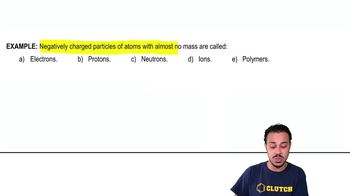
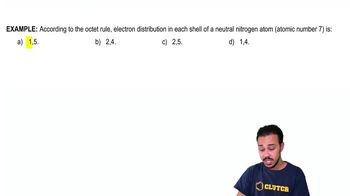
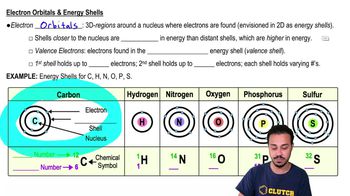
An atom is the smallest unit of matter, composed of protons (positive charge), neutrons (neutral), and electrons (negative charge).
The atomic mass number is the total number of protons and neutrons in an atom's nucleus.
The electrons in the outermost shell (valence electrons) determine an atom's ability to react with other molecules.
Organic molecules contain carbon and hydrogen atoms; inorganic molecules generally lack carbon-hydrogen bonds.
Table salt is sodium chloride, with the chemical formula NaCl.
Hydrophilic means "water-loving"; molecules that interact well with water and dissolve easily.
Covalent bonds share electrons; ionic bonds transfer electrons creating charged ions; hydrogen bonds are weak attractions between polar molecules.
Polar bonds have unequal electron sharing causing partial charges; non-polar bonds share electrons equally with no charge separation.
A peptide bond is a covalent bond linking amino acids in proteins, formed between the amino group and carboxyl group.
An ester linkage is a bond formed between a hydroxyl group and a carboxyl group, common in lipids.
Hydrogen bonds are weak, directional attractions between a hydrogen atom and electronegative atoms like oxygen or nitrogen.
DNA bases: adenine, thymine, cytosine, guanine. RNA bases: adenine, uracil, cytosine, guanine.
Amino acids are the building blocks of proteins.
A nucleotide consists of a nitrogenous base, a five-carbon sugar, and one or more phosphate groups.
Hydrogen bonds give water its unique properties: cohesion, surface tension, high specific heat, heat of vaporization, and expansion when frozen.
Cohesion allows water molecules to stick together, enabling transport in plants and maintaining surface tension.
Surface tension is the elastic-like force on water's surface caused by hydrogen bonding between molecules.
Water's high specific heat helps stabilize temperatures in organisms and environments by absorbing heat without large temperature changes.
Heat of vaporization is the energy required to convert water from liquid to gas, important for cooling mechanisms like sweating.
Water expands when frozen because hydrogen bonds form a crystalline structure that occupies more space than liquid water.