 Indietro
Microbiology Cell Structures and Functions
 05:59
05:59
Termini in questo insieme (18)
The cytoplasm is a thick, aqueous, elastic, semitransparent substance inside the plasma membrane, composed of 80% water plus proteins, carbohydrates, lipids, and ions.
The cytoskeleton is involved in cell division, maintaining cell shape, growth, and DNA movement.
The nucleoid is the region containing the bacterial chromosome and plasmids, without a nuclear membrane.
Plasmids are small, circular DNA molecules separate from the bacterial chromosome, often carrying genes for antibiotic resistance or other functions.
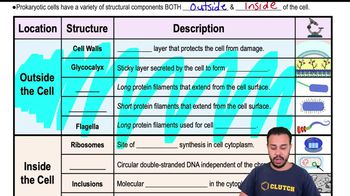
Ribosomes are the sites of protein synthesis, composed of protein and ribosomal RNA, with a 70S size made of 50S large and 30S small subunits.
Antibiotics include streptomycin, gentamicin, erythromycin, and chloramphenicol.
Inclusions are reserve deposits of nutrients such as metachromatic granules (phosphate), polysaccharide granules, lipid inclusions, and sulfur granules for energy storage.
Carboxysomes contain the RuBisCO enzyme for CO\(2\) fixation during photosynthesis.
Gas vacuoles are protein-covered cylinders that maintain buoyancy in aquatic bacteria.
Magnetosomes are iron oxide inclusions that help bacteria orient in magnetic fields and can destroy H\(2O_2\).
Endospores are highly resistant structures formed by some bacteria to survive desiccation, heat, chemicals, and radiation.
Endospores are produced by members of the genera Bacillus and Clostridium.
Sporulation is the process by which bacteria form endospores.
Germination is the process where an endospore returns to a vegetative, active bacterial cell.
Endospores can survive harsh conditions, making them important in food safety due to their resistance to heat and chemicals.
Flagella are long, few in number projections used for bacterial locomotion.
Cilia are short, numerous projections used to move substances along the cell surface.
Both flagella and cilia consist of microtubules made of the protein tubulin.