Skip to main content
Microbiology
Il mio corso
Impara
Preparazione agli esami
AI Tutor
Guide di studio
Soluzioni per libri di testo
Flashcard
Esplora
Prova l'app
Il mio corso
Impara
Preparazione agli esami
AI Tutor
Guide di studio
Soluzioni per libri di testo
Flashcard
Esplora
Prova l'app
Indietro
Microbiology: Eukaryotic Cell Structure and Classification
Puoi toccare per girare la carta.
Organic molecule in eukaryotes similar in shape to bacterial molecules
Puoi toccare per girare la carta.
👆
Organic molecule in eukaryotes similar in shape to bacterial molecules
The
70S ribosomes
found in chloroplasts and mitochondria of eukaryotes are similar in shape to bacterial ribosomes.
Avanzamenti del tracciato
I pulsanti di controllo sono stati cambiati in modalità "navigazione".
1/38
Video consigliati
07:29
Endosymbiotic Theory
16978
views
163
rank
Termini in questo insieme (38)
Nascondere definizioni
Organic molecule in eukaryotes similar in shape to bacterial molecules
The
70S ribosomes
found in chloroplasts and mitochondria of eukaryotes are similar in shape to bacterial ribosomes.
Differences between eukaryotic and prokaryotic cells: organisms
Eukaryotes
can be unicellular or multicellular;
prokaryotes
are mostly unicellular.
Differences between eukaryotic and prokaryotic cells: cell division
Eukaryotes divide by
mitosis
or
meiosis
; prokaryotes divide by
binary fission
.
Differences between eukaryotic and prokaryotic cells: nucleus
Eukaryotes have a
membrane-bound nucleus
; prokaryotes lack a nucleus.
Differences between eukaryotic and prokaryotic cells: ribosomes
Eukaryotes have
80S ribosomes
in the cytoplasm and
70S ribosomes
in mitochondria; prokaryotes have only
70S ribosomes
.
Differences between eukaryotic and prokaryotic cells: chromosomes
Eukaryotes have multiple, linear chromosomes; prokaryotes have a single, circular chromosome.
Differences between eukaryotic and prokaryotic cells: membrane-bound organelles
Eukaryotes have membrane-bound organelles; prokaryotes do not.
Why penicillin does not kill eukaryotic cells
Penicillin targets
peptidoglycan
in bacterial cell walls, which eukaryotic cells lack.
Difference between mitosis and meiosis
Mitosis produces two identical diploid cells; meiosis produces four genetically diverse haploid cells.
Eukaryotic organelles dividing by binary fission
Both
mitochondria
and
chloroplasts
divide by a process similar to binary fission.
Difference between endocytosis and exocytosis
Endocytosis
brings substances into
the cell; exocytosis
releases substances from
the cell.
Are endocytosis and exocytosis active or passive?
Both are
active processes
requiring energy to move substances across membranes.
Difference between pinocytosis and phagocytosis
Pinocytosis engulfs
liquids
; phagocytosis engulfs
large particles or cells
.
What is a phagocyte and its function?
A
phagocyte
is a cell that engulfs and digests foreign particles, bacteria, and dead cells.
Four eukaryotic kingdoms
The four kingdoms are
Protista, Fungi, Plantae,
and
Animalia
.
Two phyla of parasitic helminths
The two phyla are
Platyhelminthes
(flatworms) and
Nematoda
(roundworms).
Unicellular fungi are called
Yeasts
are unicellular fungi.
What does it mean that fungi are saprobes?
Fungi are
saprobes
because they obtain nutrients by decomposing dead organic matter.
What are dimorphic fungi?
Dimorphic fungi can exist as
yeast or mold
depending on environmental conditions.
Definition of mycoses
Mycoses
are fungal infections of animals or humans.
Genus mainly causing vaginal yeast infections
Candida
is the genus mainly responsible for vaginal yeast infections.
What is a dermatophyte?
A dermatophyte is a fungus that infects skin, hair, and nails; common infections are called
tinea
.
Common names for tinea infections
Two common names are
ringworm
and
athlete's foot
.
Location of cell walls in eukaryotes
Cell walls, when present, are located
outside the plasma membrane
; animal cells do not have cell walls.
Difference in motion between eukaryotic and prokaryotic flagella
Eukaryotic flagella move with a
whip-like motion
; prokaryotic flagella rotate like a propeller.
Do prokaryotes have cilia?
No,
prokaryotes do not possess cilia
.
Locations of eukaryotic ribosomes
Eukaryotic ribosomes are found
free in the cytoplasm
and
bound to the rough ER
.
Do eukaryotic cells have 70S ribosomes?
Yes, in
mitochondria
and
chloroplasts
, eukaryotic cells have 70S ribosomes.
Two main functions of the cytoskeleton
The cytoskeleton provides
structural support
and
facilitates cell movement
.
Main macromolecule housed in the nucleus
The nucleus contains
DNA
, the cell's genetic material.
Function of the nucleolus
The nucleolus is the site of
ribosomal RNA (rRNA) synthesis
and ribosome assembly.
Function of rough endoplasmic reticulum (RER)
RER synthesizes
proteins
; it is rough due to attached
ribosomes
.
Main function of smooth endoplasmic reticulum (SER)
SER is involved in
lipid synthesis
and
detoxification
.
Function of the Golgi apparatus
The Golgi apparatus
modifies, sorts, and packages proteins
for secretion or use in the cell.
Functions of lysosomes and peroxisomes
Lysosomes digest cellular waste; peroxisomes break down
toxic substances
like hydrogen peroxide.
Main function of mitochondria
Mitochondria produce
ATP
through cellular respiration.
Relationship between mitochondria number and cell activity
Cells with higher activity levels have
more mitochondria
to meet energy demands.
Function of chloroplasts
Chloroplasts conduct
photosynthesis
to convert light energy into chemical energy.
 IndietroIndietro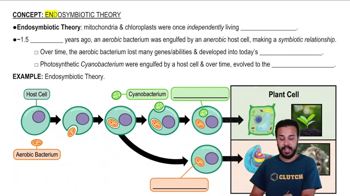
 07:29
07:29