Skip to main content
Microbiology
Il mio corso
Impara
Preparazione agli esami
AI Tutor
Guide di studio
Soluzioni per libri di testo
Flashcard
Esplora
Prova l'app
Il mio corso
Impara
Preparazione agli esami
AI Tutor
Guide di studio
Soluzioni per libri di testo
Flashcard
Esplora
Prova l'app
Indietro
Microbiology Exam 1 Study Guide
Puoi toccare per girare la carta.
Who was Anton van Leeuwenhoek and his contribution?
Puoi toccare per girare la carta.
👆
Who was Anton van Leeuwenhoek and his contribution?
Anton van Leeuwenhoek
was the first to observe and describe microorganisms using a microscope.
Avanzamenti del tracciato
I pulsanti di controllo sono stati cambiati in modalità "navigazione".
1/43
Video consigliati
03:36
Discovering Microorganisms
14787
views
527
rank
07:27
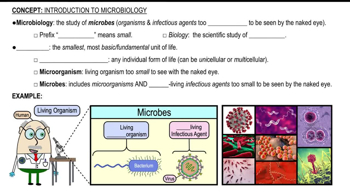
Introduction to Microbiology
27113
views
1152
rank
5
comments
1:29
Introduction to Microbiology Channel
26642
views
721
rank
2
comments
Termini in questo insieme (43)
Nascondere definizioni
Who was Anton van Leeuwenhoek and his contribution?
Anton van Leeuwenhoek
was the first to observe and describe microorganisms using a microscope.
What ended the Golden Age of Microbiology?
The Golden Age ended as many fundamental discoveries were made, and the focus shifted to molecular biology and genetics.
What is spontaneous generation?
The disproven theory that living organisms can arise from nonliving matter.
What is Koch's postulates?
A set of criteria to establish a causative relationship between a microbe and a disease.
What was the first disease proven to be bacterial in origin?
Anthrax was the first disease proven to be caused by bacteria.
What are the three domains in the classification system?
Bacteria
,
Archaea
, and
Eukarya
.
Define binary fission.
A form of asexual reproduction where a cell divides into two identical daughter cells.
What is agar?
A gelatinous substance used as a solid growth medium for microorganisms.
What is a vaccine?
A preparation that stimulates immunity against a specific disease.
What subatomic particles make up an atom?
Protons
,
neutrons
, and
electrons
.
What is atomic mass number?
The total number of protons and neutrons in an atom's nucleus.
What gives atoms the ability to react with other molecules?
The electrons, especially those in the outermost shell (valence electrons).
Difference between organic and inorganic molecules?
Organic molecules contain carbon-hydrogen bonds; inorganic molecules generally do not.
What is the compound formula for table salt?
NaCl (sodium chloride).
What does hydrophilic mean?
Having an affinity for water; water-attracting.
Difference between covalent, ionic, and hydrogen bonds?
Covalent bonds
share electrons,
ionic bonds
transfer electrons,
hydrogen bonds
are weak attractions between polar molecules.
Difference between polar and non-polar bonds?
Polar bonds have unequal electron sharing; non-polar bonds share electrons equally.
What is a peptide bond?
A covalent bond linking amino acids in a protein.
What is an ester linkage?
A bond formed between a hydroxyl and a carboxyl group, common in lipids.
Key characteristics of hydrogen bonding?
Hydrogen bonds are weak, directional, and important for water's properties and biomolecule structure.
Nitrogenous bases in DNA and RNA?
DNA: Adenine, Thymine, Cytosine, Guanine; RNA: Adenine, Uracil, Cytosine, Guanine.
What are amino acids the building blocks for?
Proteins.
What is a nucleotide and its components?
A nucleotide consists of a sugar, phosphate group, and nitrogenous base.
Importance of hydrogen bonds in water chemistry?
They give water high cohesion, surface tension, specific heat, and allow it to expand when frozen.
Difference in cell walls of gram+ and gram- bacteria?
Gram+ have thick peptidoglycan layers; gram- have thin peptidoglycan and an outer membrane.
What does an acid-fast+ cell wall have?
Mycolic acid, a waxy lipid that resists staining.
What is lipid A?
A toxic component of the gram-negative bacterial outer membrane (endotoxin).
Functions of flagella, fimbriae, and pili?
Flagella: motility; fimbriae: attachment; pili: DNA transfer.
Difference between selective permeability and facilitated diffusion?
Selective permeability controls what enters/exits; facilitated diffusion uses proteins to help molecules cross membranes.
What is phototaxis?
Movement of an organism toward (+) or away (-) from light.
What are carrier molecules in the electron transport chain?
Proteins and cofactors that transfer electrons to generate ATP.
Define redox reactions.
Chemical reactions involving the transfer of electrons; oxidation is loss, reduction is gain.
What is carbon fixation?
Conversion of inorganic CO2 into organic molecules during photosynthesis.
Molecule regenerated in Calvin-Benson cycle?
Ribulose bisphosphate (RuBP).
Energy source in light-dependent reactions?
Light energy captured by chlorophyll.
Where does aerobic respiration occur?
In the mitochondria of eukaryotes and the plasma membrane of prokaryotes.
What is ATP and ATP synthase?
ATP is the energy currency; ATP synthase is the enzyme that produces ATP.
How much ATP is produced from one glucose molecule?
Approximately 36-38 ATP molecules.
Difference between substrate-level and oxidative phosphorylation?
Substrate-level directly transfers phosphate; oxidative uses a proton gradient.
Difference between aerobic respiration, anaerobic respiration, and fermentation?
Aerobic uses oxygen; anaerobic uses other electron acceptors; fermentation does not use an electron transport chain.
What is activation energy and enzyme effect?
Activation energy is the energy needed to start a reaction; enzymes lower this energy.
Effect of temperature and pH on enzymes?
Extreme temperature or pH can denature enzymes and reduce activity.
Types of enzyme inhibition?
Competitive (binds active site), non-competitive (binds elsewhere), allosteric (changes enzyme shape).
 IndietroIndietro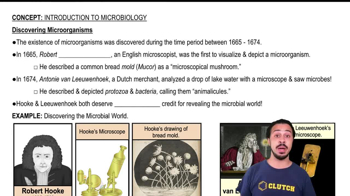
 03:36
03:36