 Indietro
Microbiology Exam I Study Guide - Chapter 3
 01:41
01:41
Termini in questo insieme (20)
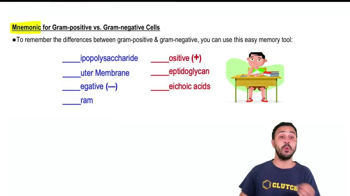
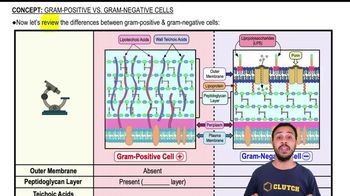
Gram-positive bacteria have a thick peptidoglycan layer purple; Gram-negative bacteria have a thin peptidoglycan layer and an outer membrane containing lipopolysaccharides. pink.
An acid-fast positive cell wall contains mycolic acid, a waxy lipid that makes it resistant to decolorization by acid-alcohol.
Lipid A is the toxic component of lipopolysaccharides (LPS) found in the outer membrane of Gram-negative bacteria.
Flagella provide motility to bacterial cells and are found in many prokaryotes.
Fimbriae are short, hair-like structures that allow bacteria to adhere to surfaces; found mainly in prokaryotes.
Axial filaments are specialized flagella wrapped around spirochetes, enabling corkscrew motility.
Pili are longer than fimbriae and involved in DNA transfer (conjugation) between bacterial cells.
Plasma membranes control selective permeability and are found in all cells.
The nucleoid region is the area in prokaryotic cells where the DNA is located, not enclosed by a membrane.
Metachromatic granules are phosphate storage inclusions found in some bacteria.
Mitochondria are organelles in eukaryotic cells responsible for ATP production via cellular respiration.
Hami are grappling hook-like structures used by some archaea for attachment.
Rough ER has ribosomes and synthesizes proteins; Smooth ER synthesizes lipids and detoxifies chemicals in eukaryotic cells.
Ribosomes synthesize proteins and are found in all cells.
Contractile vacuoles expel excess water from some protists to maintain osmotic balance.
Lysosomes contain digestive enzymes to break down waste and cellular debris in eukaryotic cells.
Flagellar arrangements include monotrichous (single flagellum), lophotrichous (tuft at one end), amphitrichous (flagella at both ends), and peritrichous (flagella all over).
Selective permeability allows only certain molecules to pass; facilitated diffusion uses transport proteins to move molecules down their concentration gradient.
Phototaxis is movement of an organism toward (positive) or away from (negative) light stimuli.
Chemotaxis is movement of an organism toward (positive) or away from (negative) chemical stimuli.