 Indietro
Microbiology Fundamentals: Atoms, Molecules, and Biological Macromolecules
 02:13
02:13
Termini in questo insieme (30)
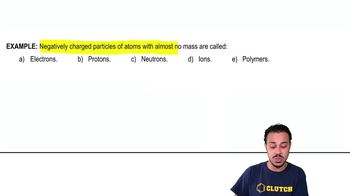
Atoms consist of protons (positive charge, nucleus), neutrons (neutral charge, nucleus), and electrons (negative charge, orbiting the nucleus).
A cation is a positively charged ion; an anion is a negatively charged ion.
Organic molecules contain carbon-hydrogen bonds; inorganic molecules generally lack carbon-hydrogen bonds.
The pH of a neutral solution is 7.
Acidic solutions have pH less than 7 and contain more H+ ions than OH- ions.
Basic (alkaline) solutions have pH greater than 7 and contain more OH- ions than H+ ions.
A buffer stabilizes pH by absorbing or releasing H+ ions to resist changes in acidity or alkalinity.
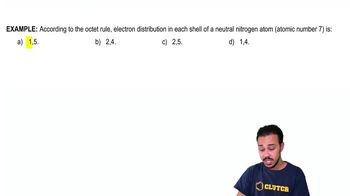
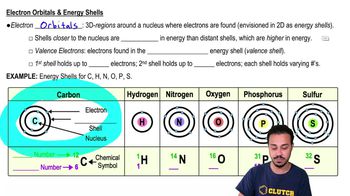
An electron shell is an energy level around the nucleus; the valence shell is the outermost shell. Valence electrons determine chemical bonding.
An ionic bond forms when electrons are transferred from one atom to another, creating oppositely charged ions that attract.
A covalent bond shares electrons between atoms. A polar covalent bond shares electrons unequally, causing partial charges.
Hydrogen bonds are weak attractions between a hydrogen atom in one molecule and an electronegative atom in another.
Hydrophobic molecules repel water; hydrophilic molecules attract and dissolve in water.
An amphipathic molecule has both hydrophobic and hydrophilic parts. Phospholipids are amphipathic.
Reactants are starting substances; products are substances formed by the reaction.
Catalysts speed up reactions without being consumed. Enzymes are biological catalysts that speed up metabolic reactions.
Dehydration synthesis joins two monomers by removing a water molecule.
Hydrolysis breaks down molecules by adding water, producing smaller molecules.
Exchange reactions involve swapping parts between molecules to form new products.
The basic unit of carbohydrates is the monosaccharide.
Glycogen is a branched polysaccharide used for energy storage in animals and bacteria.
Carbohydrates provide energy and structural support.
Bacterial capsules are polysaccharide layers that protect bacteria and aid in adherence.
Lipids are mainly hydrophobic.
A triglyceride consists of glycerol and three fatty acid chains.
The basic unit of nucleic acids is the nucleotide.
DNA has deoxyribose sugar, is double-stranded, and contains thymine; RNA has ribose sugar, is single-stranded, and contains uracil.
ATP (adenosine triphosphate) molecules are the energy currency of the cell.
The basic unit of proteins is the amino acid.
Peptide bonds join amino acids together in proteins.
Proteins have primary, secondary, tertiary, and quaternary structures.