 Indietro
Microbiology Fundamentals: Key Concepts and Terms
 01:35
01:35
Termini in questo insieme (29)
Abiogenesis is the hypothesis that life arose naturally from non-living matter on early Earth.
Antiseptic technique involves practices used to prevent contamination by pathogens during medical procedures.
The germ theory of disease states that microorganisms are the cause of many diseases.
Koch's postulates are criteria used to establish a causative relationship between a microbe and a disease.
Microorganisms are microscopic organisms including bacteria, fungi, protozoa, and viruses.
A pathogen is a microorganism that causes disease; pathogenic describes its disease-causing ability.
Prontosil was the first sulfa drug used as chemotherapy to treat bacterial infections.
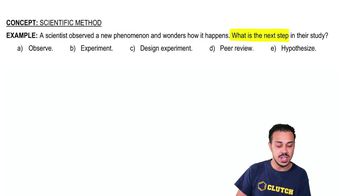
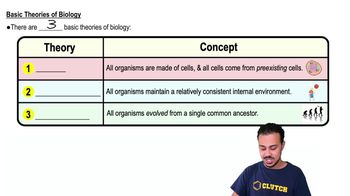
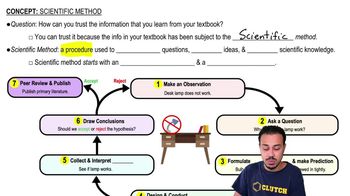
The scientific method is a systematic process of observation, hypothesis, experimentation, and conclusion.
Spontaneous generation is the disproven idea that living organisms arise from nonliving matter spontaneously.
The taxonomic system classifies organisms into hierarchical groups based on shared characteristics.
Viruses are acellular infectious agents studied in virology that require host cells to replicate.
ATP (adenosine triphosphate) is the primary energy carrier molecule in cells.
Anabolism is the metabolic process of building complex molecules from simpler ones, requiring energy.
Catabolism is the metabolic breakdown of complex molecules into simpler ones, releasing energy.
Chemical bonds are forces holding atoms together, including covalent, ionic, and hydrogen bonds.
A covalent bond forms when atoms share electron pairs to achieve stability.
A hydrogen bond is a weak attraction between a hydrogen atom and an electronegative atom.
pH measures the acidity or alkalinity of a solution on a scale from 0 to 14.
Polysaccharides are large carbohydrate polymers made of many monosaccharide units.
The primary structure of a protein is its unique sequence of amino acids linked by peptide bonds.
Denaturation is the loss of a protein's native structure due to external stress, affecting function.
Nucleic acids like DNA and RNA store and transmit genetic information.
A peptide bond is a covalent bond linking amino acids in a protein chain.
Buffers maintain stable pH by neutralizing added acids or bases in biological systems.
Electronegativity is an atom's ability to attract electrons in a chemical bond.
A monosaccharide is the simplest carbohydrate unit, such as glucose or fructose.
Hydrophilic molecules interact with water; hydrophobic molecules repel water.
Dehydration synthesis joins monomers by removing water to form polymers.
Hydrolysis breaks polymers into monomers by adding water.